Navigating customs procedures is the final, critical hurdle in gold export from Sudan. Even with perfect licensing and assay certificates, a single error in customs declaration can lead to shipment delays, fines, or total seizure of the cargo. For institutional buyers and refiners, understanding the specific protocols of the Sudanese Customs Authority and how they align with international import rules is essential for ensuring international gold trading flows smoothly.
Sudan Gold treats customs clearance not as an administrative afterthought, but as a strategic operational phase. Our dedicated logistics team manages every interaction with customs officials, ensuring that declarations are accurate, duties are paid, and physical inspections are conducted efficiently. We guarantee that your gold clears Khartoum International Airport without incident, ready for its journey to global markets.
The Role of the Sudanese Customs Authority
The Sudanese Customs Authority acts as the gatekeeper for all exports. Its primary mandate is to verify that goods leaving the country match their documentation and that all state revenues (taxes, royalties) have been collected.
- Verification: Customs officers cross-check the physical cargo against the Export Permit, Commercial Invoice, and Packing List.
- Valuation: They ensure the declared value aligns with current market rates to prevent under-invoicing (tax evasion) or over-invoicing (money laundering).
- Security: They coordinate with security agencies to prevent the smuggling of illicit goods or unauthorized gold.
For Sudan gold exporters, building a reputation for accuracy and transparency with customs officials is vital. Sudan Gold maintains a clean track record, facilitating faster processing times for our shipments.
Step-by-Step Customs Clearance Process
Our workflow ensures zero defects in customs declaration:
1. Pre-Arrival Documentation Submission
Before the gold even reaches the airport, our team submits digital copies of all documents to Customs via the national single-window system. This allows officers to begin their review in advance.
- Documents: Export Permit, Assay Certificate, Tax Clearance, Commercial Invoice, Air Waybill (draft).
2. Physical Inspection and Weighing
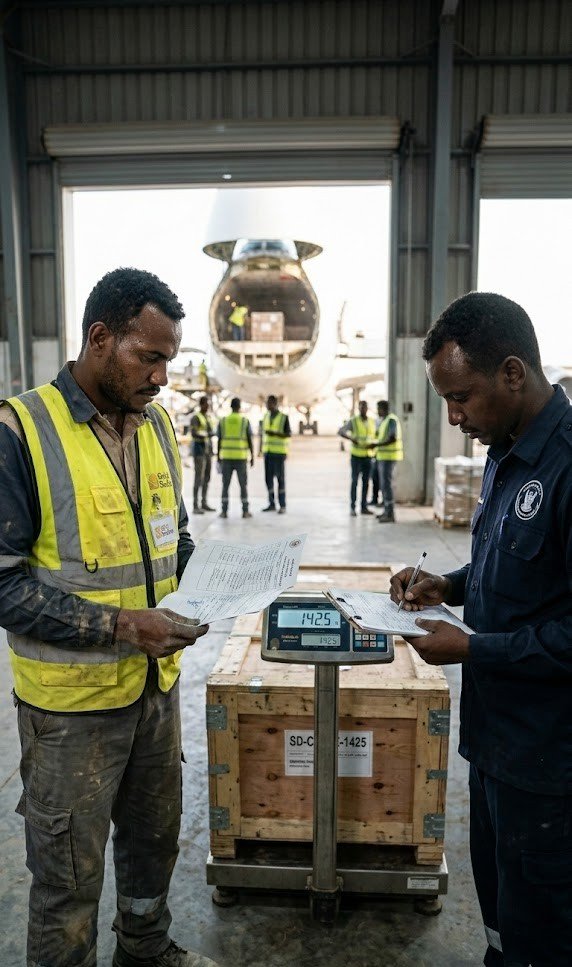
Upon arrival at the cargo terminal, the shipment undergoes a physical inspection.
- Seal Verification: Officers check that security seals on the crates match the numbers on the manifest.
- Weight Check: Cargo is weighed on certified scales to confirm it matches the declared gross weight within a tight tolerance (usually ±0.5%).
- Visual Check: Random crates may be opened to verify the form of the gold (doré bars, nuggets) matches the description.
3. Duty and Fee Assessment
While gold exports are often exempt from standard export duties to encourage formal trade, specific administrative fees and service charges apply.
- Payment: These fees are paid electronically, and receipts are generated instantly.
- Verification: Customs confirms payment before releasing the cargo for loading.
4. Final Release and Loading
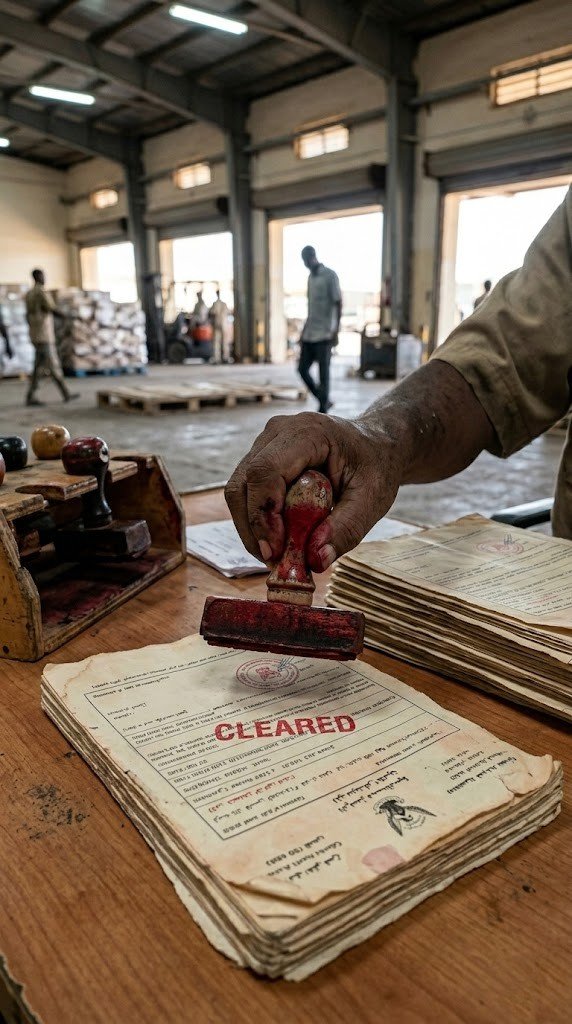
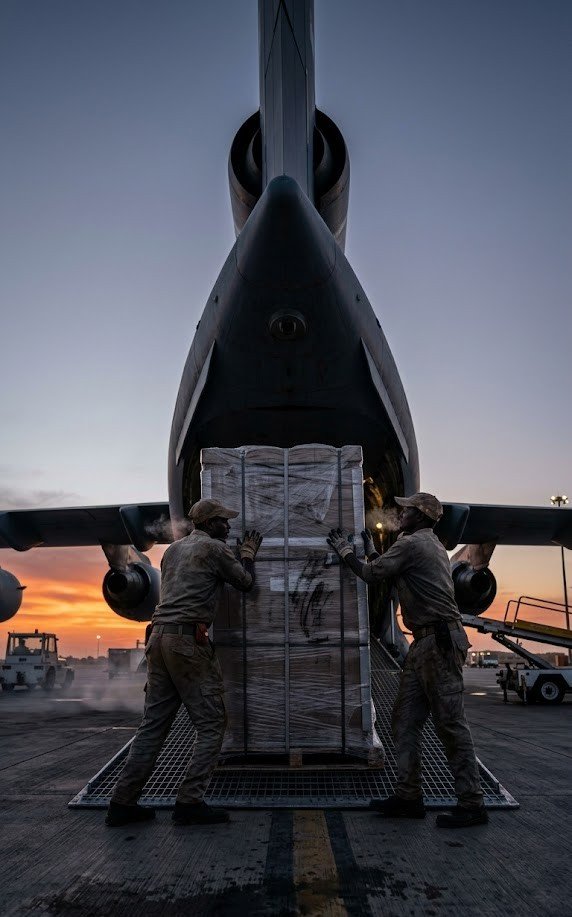
Once all checks are passed and fees paid, Customs issues a final “Release Order.” The cargo is then cleared for transfer to the airline’s secure zone for loading onto the aircraft.
Common Customs Challenges and Solutions
Even experienced exporters face hurdles. Here is how Sudan Gold mitigates them:
- Discrepancies in Weight: Minor differences between factory weight and airport scale can cause delays. Solution: We use calibrated, certified scales in our vault and allow for a small buffer in declarations.
- Document Errors: Typos in names or license numbers. Solution: Our “Four-Eyes” principle means every document is reviewed by two separate compliance officers before submission.
- System Outages: Digital customs systems can occasionally go offline. Solution: We maintain physical relationships with officials and keep hard copies of all files to allow for manual processing if needed.
Alignment with International Customs Standards
Sudanese customs procedures are increasingly aligned with global standards to facilitate trade.
- HS Code Harmonization: Gold is classified under HS Code 7108.12 (Unwrought gold), consistent with global norms.
- WCO Framework: Sudan adheres to World Customs Organization guidelines for security and facilitation.
- Data Exchange: Increasingly, customs data is shared with destination countries (e.g., UAE, Switzerland) to pre-clear arrivals.
This alignment means that gold cleared in Khartoum faces fewer questions upon arrival in Dubai or Zurich, speeding up the entire supply chain.
Why Professional Customs Management Matters
For buyers, the risk of customs failure is total loss. If cargo is seized in Khartoum due to a declaration error, recovering it can take months or years, if ever.
- Financial Security: Proper clearance ensures your payment is not tied up in dispute.
- Timeline Certainty: Efficient processing keeps delivery schedules on track.
- Reputational Safety: Clean customs records protect your company from being flagged for future inspections.
Sudan Gold’s expertise turns this complex bureaucratic process into a routine, reliable operation.
Conclusion and Professional Call to Action
Customs procedures for Sudan gold exports are rigorous but manageable with the right expertise. For international buyers, partnering with an exporter who masters these protocols is the only way to ensure secure, timely delivery.
Sudan Gold offers this mastery. We invite refiners, sovereign funds, and institutional investors to rely on our seamless customs management. Let us demonstrate how our precision and local knowledge can eliminate risk from your supply chain.
Contact us today to discuss our export clearance track record.
Website: goldsudan.com Email: Sales@goldsudan.com