The supply chain of Sudanese gold is a dynamic, multi-layered network that bridges the gap between remote, artisanal excavation sites in the Sahara and the high-security vaults of global financial hubs. For institutional buyers, understanding the supply chain of Sudanese gold is not merely an academic exercise; it is a critical component of risk management. In a market where informal trading has historically coexisted with formal exports, the ability to trace the journey of every gram from the moment it is unearthed to its final assay in Dubai or Zurich is the definitive marker of a secure investment.
Sudan Gold has engineered a supply chain that prioritizes visibility, security, and compliance at every node. We have replaced the fragmented, opaque networks of the past with a streamlined, vertically integrated system. This ensures that the gold reaching our international partners is not only of verified quality but also ethically sourced and legally exported, fully aligned with OECD due diligence guidelines.
Stage 1: Extraction and Initial Aggregation
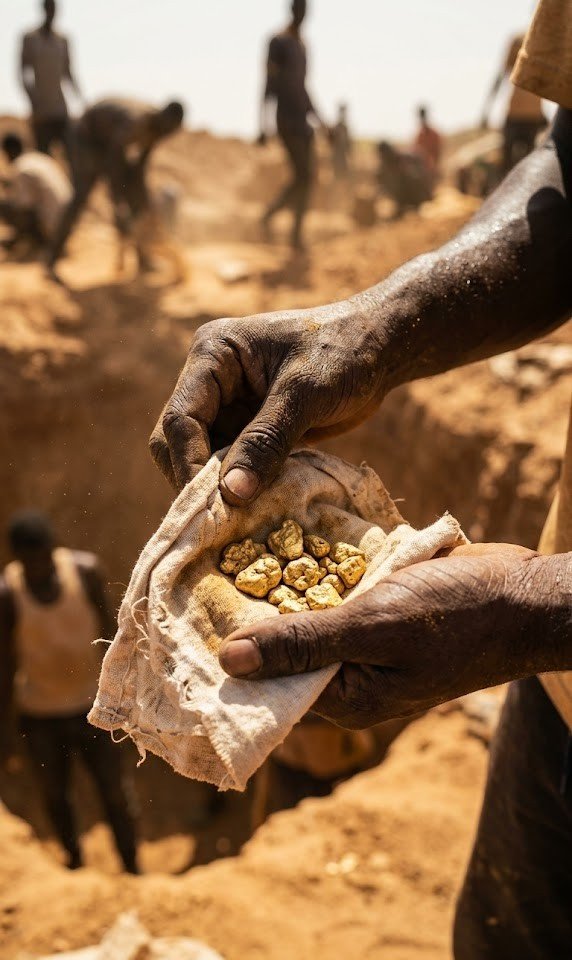
The supply chain begins at the mine face, predominantly in the Northern and River Nile states. Here, production is driven by a mix of licensed artisanal cooperatives and increasingly mechanized commercial entities.
- Artisanal Extraction: Individual miners or small groups extract ore using manual tools or basic machinery. The output is often in the form of raw nuggets, dust, or coarse powder.
- Cooperative Collection: Miners bring their daily production to a designated collection point within their licensed cooperative. Here, the material is weighed, visually inspected, and recorded in a local logbook.
- Direct Procurement: Sudan Gold’s field agents visit these cooperatives directly. We bypass informal middlemen, purchasing the gold straight from the source. This direct interaction is the first critical step in establishing a clean chain of custody.
- Initial Documentation: At the point of purchase, we generate a digital record including the weight, the miner’s ID, the cooperative’s license number, and GPS coordinates. This data forms the genesis of the gold’s traceability profile.
Stage 2: Secure Domestic Logistics
Moving gold from remote desert locations to the central hub in Khartoum is the most vulnerable phase of the domestic supply chain. Security and integrity are paramount.
- Armored Transport: All gold is transported in armored vehicles equipped with GPS tracking and communication systems. These convoys are often accompanied by armed security personnel, especially when traversing remote areas.
- Tamper-Evident Sealing: Upon aggregation at the cooperative site, the gold is sealed in tamper-evident containers. Each container is assigned a unique serial number that is logged against the initial procurement record.
- Chain of Custody Handovers: Every transfer of custody from the cooperative to the transport team, and from the transport team to the vault is documented with dual signatures. Any break in this chain is treated as a critical security incident.
- Real-Time Monitoring: Our operations center monitors the location and status of all shipments in real-time, allowing for immediate response to any delays or anomalies.
Stage 3: Centralized Assaying and Consolidation
Once the gold arrives at our secure facility in Khartoum, it undergoes rigorous technical processing to transform it from raw material into a standardized tradeable asset.
- Intake Verification: The seals on the transport containers are verified against the shipping manifest. Any sign of tampering results in an immediate quarantine and investigation.
- Sampling and Assaying: Representative samples are taken from each batch under witness supervision. These samples are sent to accredited laboratories for fire assay testing to determine exact purity and impurity profiles.
- Consolidation: Small batches from various sources are consolidated into larger lots based on purity levels. This creates shipment-sized volumes that are efficient for international export.
- Doré Casting: The consolidated gold is melted and cast into doré bars. These bars are stamped with a unique serial number, weight, and preliminary purity estimate.
- Certification: An official internal assay certificate is issued for each bar, which serves as the basis for the export declaration and commercial invoice.

Stage 4: Regulatory Compliance and Export Authorization
Before the gold can leave Sudan, it must pass through a rigorous regulatory gateway designed to ensure fiscal compliance and legal provenance.
- Document Compilation: We assemble a comprehensive export dossier including the assay certificates, mining licenses, tax clearance certificates, and proof of royalty payments.
- Government Inspection: Officials from the Ministry of Finance and the Central Bank of Sudan review the dossier and physically inspect the cargo to verify weight and purity against the declared values.
- Export Permit Issuance: Once satisfied, the authorities issue a specific Export Permit for the shipment. This document is the legal “passport” for the gold, authorizing its cross-border movement.
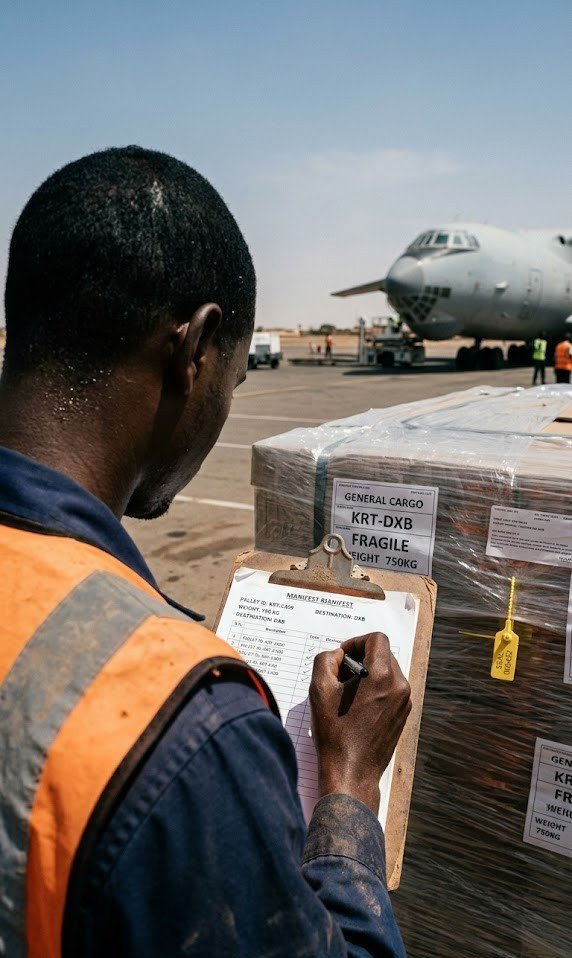
- Customs Clearance: The Sudanese Customs Authority performs final checks and stamps the manifest, clearing the cargo for loading onto international flights.
Our deep expertise in this regulatory landscape ensures that this process is swift and error-free, preventing costly delays.
Stage 5: International Logistics and Final Delivery
The final leg of the supply chain connects Khartoum to the global market.
- Specialized Air Freight: We partner exclusively with authorized high-value cargo carriers that specialize in precious metals. Flights typically route directly to Dubai (DXB), with onward connections to Zurich, London, or New York as needed.
- In-Transit Security: Cargo is tracked via satellite throughout the flight. Insurance coverage is active from the moment the vault door closes in Khartoum until it opens at the destination.
- Destination Intake: Upon arrival, the gold is transferred under guard to the buyer’s designated vault or refinery.
- Final Reconciliation: A final independent assay is conducted at the destination. Any minor variances between the Khartoum assay and the final result are reconciled financially based on the terms of the sales contract.
Conclusion
The supply chain of Sudanese gold is a complex ecosystem that demands meticulous management to ensure integrity and value. From the dusty excavation pits of the Northern State to the gleaming vaults of global finance, every step requires robust security, transparent documentation, and unwavering compliance. Sudan Gold has mastered this end-to-end process, offering institutional buyers a supply chain that is not only efficient but also ethically sound and fully traceable. By controlling every node from mine to market, we deliver more than just gold; we deliver certainty in an uncertain world.
Website: goldsudan.com Email: Sales@goldsudan.com