In the high-value arena of international gold trading, purity is the definitive metric of value. For institutional buyers sourcing from Sudan, understanding gold purity standards is critical to accurate valuation, refining efficiency, and contractual compliance. Unlike refined bullion which is typically 99.99% pure, gold exported directly from Sudan is predominantly in the form of doré bars an intermediate product containing gold mixed with silver, copper, and other base metals. Navigating the variance in these purity levels requires technical expertise and rigorous assay protocols to ensure fair pricing and seamless refinery intake.
Sudan Gold adheres to strict international purity benchmarks. We provide transparent, verified data on the fineness of every batch we export, ensuring that our partners can accurately calculate yield and refining costs. Our commitment to precise purity assessment eliminates disputes and builds trust in the gold export from Sudan supply chain.
Understanding Doré Gold vs. Refined Bullion
It is essential for buyers to distinguish between the two primary forms of gold in the trade:
- Refined Bullion: Produced by accredited refineries (e.g., in Switzerland or Dubai), this gold is 99.99% pure (24 karat). It is the final product ready for investment or jewelry manufacturing.
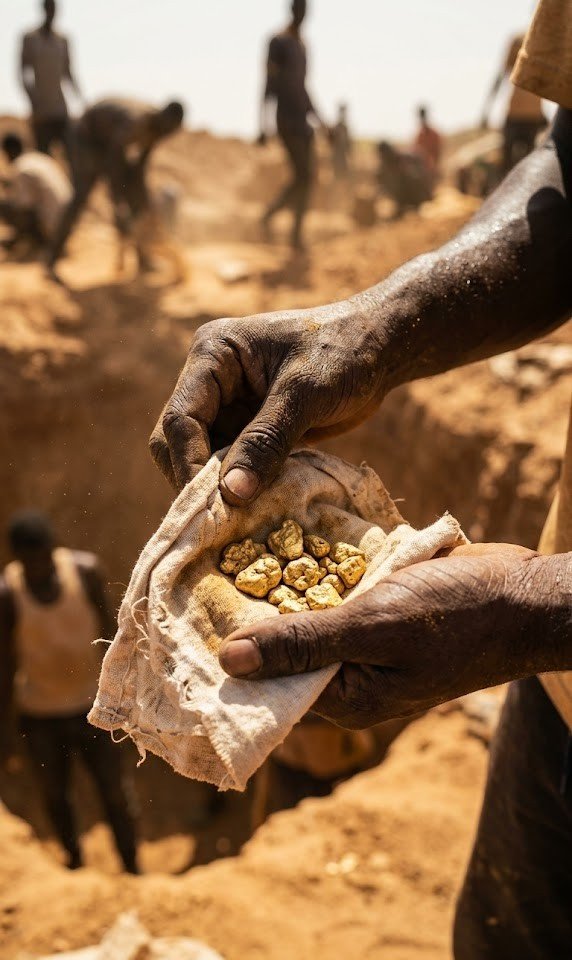
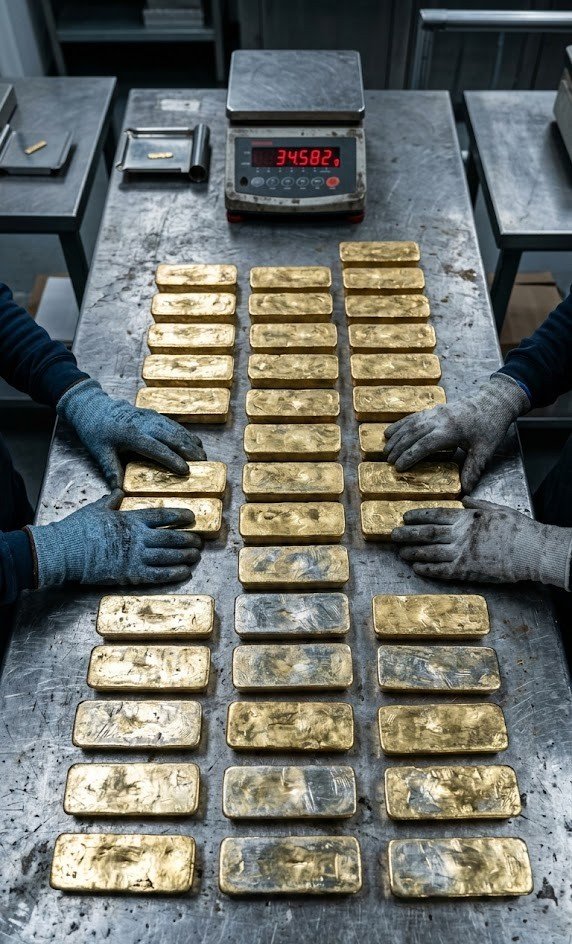
- Doré Bar: The standard export form from Sudan. This is a semi-pure alloy produced by melting raw gold at the source. Its purity typically ranges from 85% to 92% (20–22 karat), with the remainder consisting mostly of silver and copper, and trace amounts of iron or lead.
Buyers do not pay for the impurities. The price is calculated based on the fine gold content (the actual amount of pure gold within the doré bar), determined by independent assay.
Typical Purity Ranges in Sudanese Gold
The purity of Sudanese doré varies depending on the geological source:
- Northern State Deposits: Often yield higher purity gold, frequently ranging between 90% and 92%. These deposits tend to have lower silver content.
- River Nile State Deposits: Typically produce doré with purity around 88% to 90%, with slightly higher silver concentrations.
- Red Sea State Deposits: Can vary more widely, often between 85% and 89%, sometimes with higher copper content which gives the bar a reddish tint.
Understanding these regional variations helps buyers anticipate refining yields and chemical processing requirements.
The Assay Process: Determining Fine Content
Accurate purity determination is the cornerstone of fair trade. Sudan Gold utilizes the Fire Assay method, the global industry standard for precision.
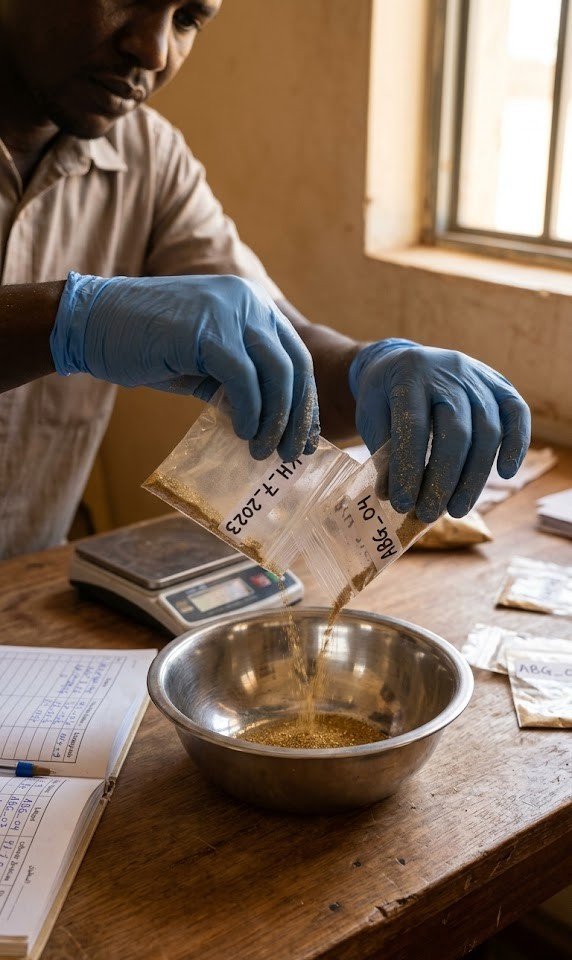
- Sampling: A representative sample is drilled or clipped from the doré bar to ensure it reflects the entire batch’s composition.
- Cupellation: The sample is melted with lead in a porous cupel. Base metals oxidize and are absorbed by the cupel, leaving behind a button of pure gold and silver.
- Parting: The gold-silver button is treated with acid to dissolve the silver, leaving only pure gold.
- Weighing: The final pure gold bead is weighed with extreme precision (to 0.01%).
- Calculation: The ratio of the final pure gold weight to the original sample weight determines the purity percentage (fineness).
This process provides the definitive data used for pricing and export documentation.
Impact of Impurities on Valuation and Refining
The specific mix of impurities affects both the price and the refining process:
- Silver Content: High silver content can be beneficial as silver is also a valuable precious metal, often credited to the buyer if recoverable. However, it requires specific chemical separation processes (parting).
- Copper & Base Metals: These are detrimental to the refining yield as they require more flux and energy to remove. High copper content may result in slightly higher refining charges.
- Trace Elements: Elements like mercury or lead must be carefully managed due to environmental and safety regulations during refining.
Our assay certificates detail the full elemental breakdown, allowing buyers to calculate the exact net value and refining costs.
International Standards and Compliance
Sudan Gold ensures our purity standards align with global expectations:
- LBMA Guidelines: While doré is not LBMA-certified, our assay methods follow LBMA-approved protocols to ensure results are accepted by accredited refineries.
- ISO Accreditation: Our partner laboratories operate under ISO/IEC 17025 standards for testing and calibration, guaranteeing data accuracy.
- Transparency: We provide full disclosure of purity ranges in our contracts, avoiding over-promising and ensuring realistic yield expectations.
Conclusion
Gold purity standards in Sudan are defined by the reality of doré production, but governed by the precision of international assay science. By understanding the typical purity ranges and the rigorous methods used to verify them, buyers can engage with confidence, knowing exactly what they are purchasing. Sudan Gold’s commitment to transparent, accurate purity reporting ensures that every transaction is fair, every yield is predictable, and every partnership is built on the solid foundation of truth. In the gold trade, purity is not just a number; it is the currency of trust.
Website: goldsudan.com Email: Sales@goldsudan.com