The integrity of gold export from Sudan hinges on the scientific rigor applied before a single gram leaves the country. For institutional buyers, refiners, and banks, the laboratory testing phase is the critical checkpoint where raw potential is converted into verified value. It is here that assumptions are replaced by data, and trust is established through immutable scientific fact. Understanding the laboratory testing protocols in Sudan is essential for buyers to ensure that the assay certificates accompanying their shipments meet global standards, facilitating seamless intake at refineries in Dubai, Zurich, or London.
Sudan Gold operates state-of-the-art assay laboratories in Khartoum, accredited to international standards (ISO/IEC 17025). We do not outsource this critical function to unverified third parties. Our internal labs, combined with partnerships with top-tier international facilities for cross-verification, ensure that every batch of gold we export is characterized with absolute precision, transparency, and defensibility.
The Role of the Laboratory in the Export Chain
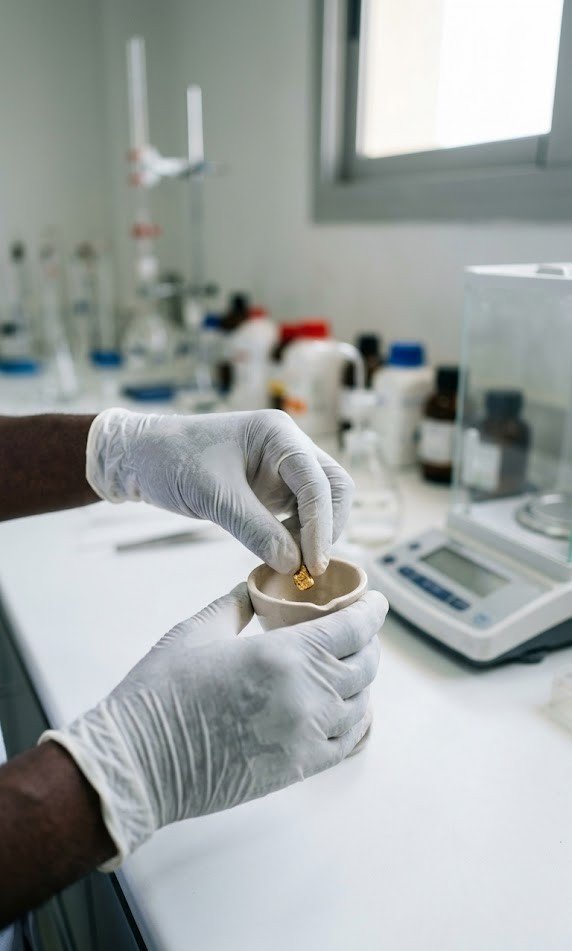
The laboratory is the neutral arbiter of value in the gold trade. Its functions extend beyond simple purity testing:
- Valuation Basis: The assay result determines the exact fine gold content, which is the sole basis for pricing. A 0.1% error can represent thousands of dollars in a large shipment.
- Refining Planning: Detailed elemental analysis (identifying silver, copper, iron, etc.) allows destination refineries to prepare the correct chemical processes for efficient recovery.
- Compliance Verification: Labs verify that the gold meets specific purity thresholds required for export licenses and international banking acceptance.
- Dispute Prevention: Accurate, accredited testing minimizes the risk of discrepancies between the exporter’s and importer’s results, preventing costly legal conflicts.
Core Testing Methodologies
Sudan Gold utilizes a multi-stage testing approach to ensure maximum accuracy:
1. Fire Assay (The Gold Standard)
For final settlement, we rely exclusively on Fire Assay, the most accurate method for determining gold content.
- Process: As detailed in previous sections, this involves fusion, cupellation, and parting to isolate pure gold.
- Precision: Capable of measuring purity to within 0.01% (1 part in 10,000).
- Application: Used for all doré bars and bulk shipments intended for international export.
2. Inductively Coupled Plasma Mass Spectrometry (ICP-MS)
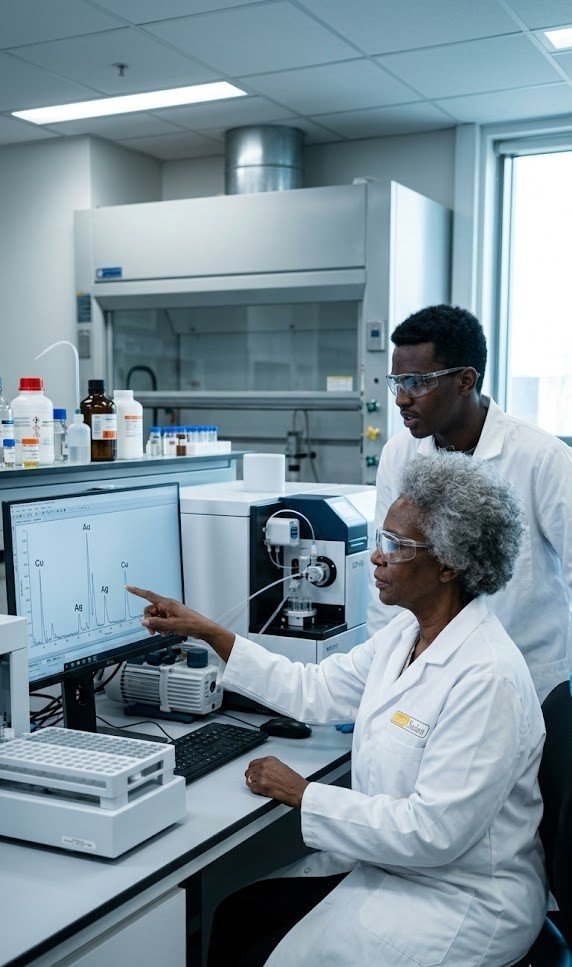
While Fire Assay measures gold, ICP-MS identifies trace elements.
- Purpose: Detects ppm-level impurities like mercury, lead, arsenic, and platinum group metals.
- Value: Crucial for environmental compliance and safety at the destination refinery. It ensures no hazardous surprises await the buyer.
3. X-Ray Fluorescence (XRF) – Screening Only
- Usage: Used strictly for rapid, non-destructive preliminary screening of incoming raw gold from miners.
- Limitation: XRF analyzes only the surface and is not homogeneous; it is never used for final pricing or export certification.
Accreditation and Quality Assurance
To ensure our lab results are globally accepted, Sudan Gold adheres to strict quality frameworks:
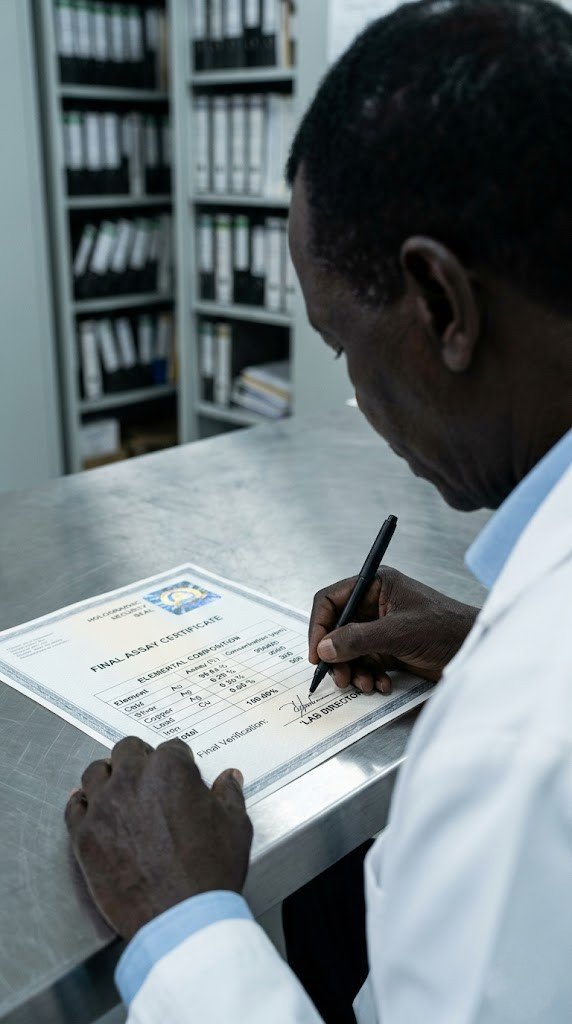
- ISO/IEC 17025 Accreditation: Our laboratories are accredited to this international standard, demonstrating technical competence and the validity of our testing methods.
- Certified Reference Materials (CRMs): We daily run tests on certified gold standards with known purity to calibrate our equipment and validate operator accuracy.
- Blind Duplicates: Random duplicate samples are tested by different analysts to check for consistency and eliminate bias.
- Equipment Calibration: All balances, furnaces, and spectrometers are calibrated regularly by certified external technicians.
The Chain of Custody in Testing
Security and integrity are maintained throughout the testing process:
- Sample Logging: Every sample is assigned a unique barcode upon receipt, stripping away any identifying information about the source to prevent bias (blind testing).
- Secure Storage: Samples are stored in a locked, access-controlled vault before and after testing.
- Witnessed Sampling: Buyers or their representatives are welcome to witness the sampling and sealing process to ensure the sample truly represents the batch.
- Digital Trail: All test results are automatically logged in a secure LIMS (Laboratory Information Management System), creating an immutable audit trail.
Bridging the Gap: Sudan to Global Refineries
A common concern for buyers is whether Sudanese assay results will be accepted abroad.
- Methodological Alignment: Our Fire Assay protocols mirror those used by LBMA-accredited refineries, ensuring comparability.
- Cross-Verification: For new clients, we encourage splitting samples: one half tested in Khartoum, the other half sent independently to a referee lab in Dubai or Switzerland. Historically, our variance is well within the acceptable ±0.5% industry tolerance.
- Transparency: We provide full raw data logs, not just the final certificate, allowing refinery chemists to review our methodology if needed.
Conclusion
Laboratory testing in Sudan gold exports is the scientific backbone of the trade. It transforms raw, ambiguous metal into a precise, bankable asset. By investing in accredited facilities, rigorous methodologies, and transparent processes, Sudan Gold ensures that every assay certificate we issue is a trustworthy promise of value. For international buyers, this commitment to scientific excellence removes uncertainty, enabling confident, efficient, and profitable transactions in the global gold market.
Website: goldsudan.com Email: Sales@goldsudan.com