In the global precious metals market, the term “bullion” often conjures images of perfect 99.99% pure bars stamped by Swiss refineries. However, for gold export from Sudan, the reality is different yet equally critical. Sudan primarily exports doré bars a semi-pure alloy of gold, silver, and copper produced directly from mined ore. Understanding the bullion standards for export from Sudan is essential for international buyers to manage expectations regarding purity, form, and refining requirements. While Sudanese doré does not meet the “Good Delivery” standard of refined bullion, it adheres to specific commercial and regulatory specifications that make it a viable, high-value feedstock for the world’s leading refineries.
Sudan Gold ensures that every doré bar we export meets rigorous casting, weighing, and documentation standards. We bridge the gap between local production capabilities and international refinery intake requirements, ensuring our partners receive a consistent, traceable, and commercially viable product ready for final refinement.
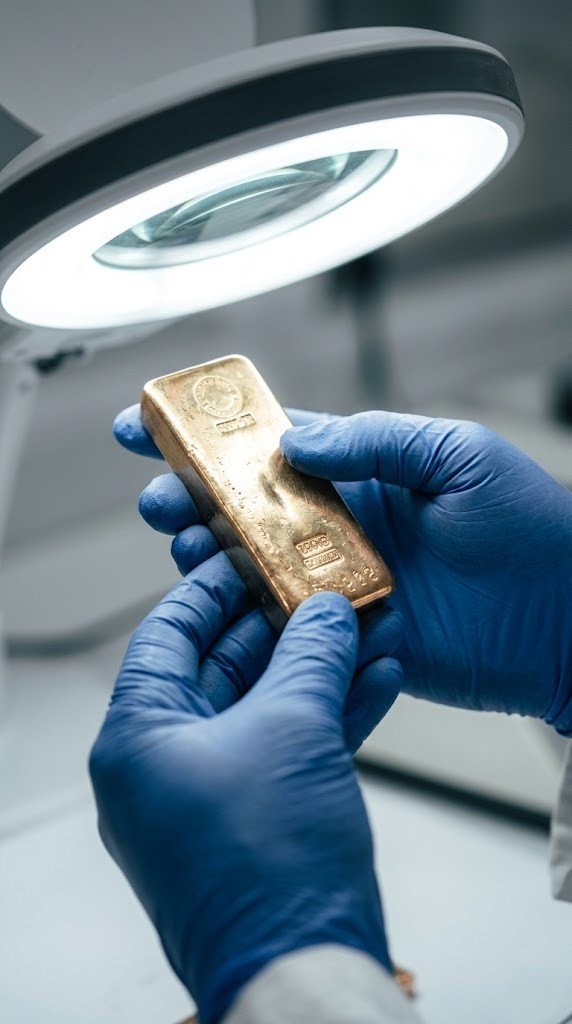
Doré Bars vs. Refined Bullion: The Key Distinction
It is vital for buyers to distinguish between the two forms of gold traded internationally:
- Refined Bullion (Good Delivery): Produced by LBMA-accredited refineries. Purity is 99.5% minimum (typically 99.99%). These bars are standardized in weight (400 oz) and dimensions, accepted globally for direct settlement and trading.
- Doré Bars (Sudan Export Standard): The standard output from Sudanese mining and aggregation. Purity typically ranges from 85% to 92%. The remainder consists mainly of silver and copper. These bars are not tradable on the spot market as “bullion” but are sold as feedstock to refineries for further processing.
Sudan’s export standards are designed for doré, not refined bullion. Attempting to export 99.99% bars directly from local mines is economically unfeasible due to the lack of large-scale refining infrastructure within the country. Instead, the model is to export high-grade doré to hubs like Dubai or Zurich for final refining.
Physical Specifications for Sudanese Doré Bars
While not “Good Delivery” standard, Sudanese exporters follow commercial best practices to ensure acceptability:
- Weight: Bars are typically cast in convenient sizes for handling and shipping, ranging from 1 kg to 15 kg. Larger blocks (up to 30 kg) are sometimes produced for bulk shipments.
- Dimensions: Roughly rectangular or trapezoidal shapes, designed to stack efficiently in secure crates. Exact dimensions vary by caster but must allow for easy sampling (drilling/clipping).
- Markings: Each bar must be clearly stamped with:
- Unique Serial Number
- Gross Weight
- Batch/Lot Number
- Exporter’s Mark/Logo
- Preliminary Fineness (optional but recommended)
- Surface Quality: Bars should be free of excessive slag, sand inclusions, or large voids. A relatively smooth surface indicates proper melting and fluxing, which aids in accurate sampling.
Purity and Composition Standards
The defining characteristic of Sudanese bullion is its variable composition:
- Gold Content: Typically 850–920 fine (85%–92% gold). This is verified by fire assay before export.
- Silver Content: Often the primary impurity, ranging from 5% to 12%. Silver is a valuable by-product that refineries recover and credit to the buyer.
- Base Metals: Copper, iron, and lead usually make up the remaining 1%–5%. High levels of base metals can increase refining charges.
- Trace Elements: Strict limits are applied to hazardous elements like mercury and arsenic. Sudan Gold tests for these via ICP-MS to ensure compliance with environmental safety standards at destination refineries.
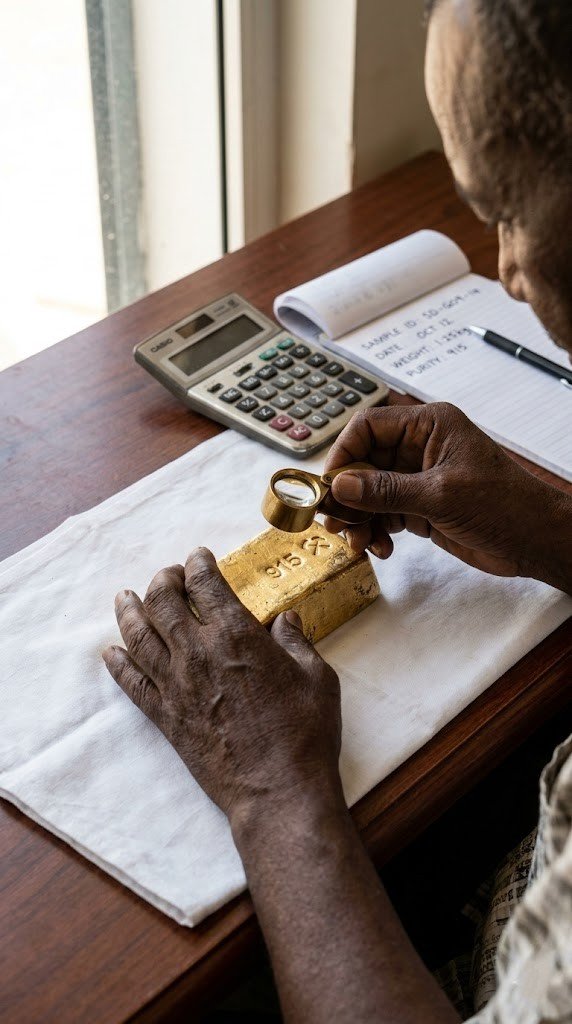
Regulatory and Compliance Requirements
Exporting doré bars from Sudan requires adherence to specific government mandates:
- Minimum Purity Threshold: The Central Bank of Sudan and Ministry of Finance may set a minimum acceptable fineness for export to ensure value retention and tax efficiency.
- Assay Certification: Every shipment must be accompanied by an official assay certificate from an accredited laboratory detailing the exact composition.
- Stamping and Serialization: Regulations often require unique serialization to prevent commingling and ensure traceability back to the source mine or cooperative.
- Packaging Standards: Bars must be packed in tamper-evident, secure containers approved by customs and aviation security authorities.
Alignment with Refinery Intake Standards
The ultimate test of Sudanese bullion standards is acceptance by international refineries.
- Sampling Compatibility: Bars must be cast in a way that allows representative sampling (e.g., not too thick to drill, not too brittle to clip).
- Homogeneity: Proper fluxing during casting ensures metals are mixed evenly, preventing assay discrepancies.
- Documentation Match: Physical stamps on the bar must match the weight and serial numbers on the export permit and assay certificate exactly.
Sudan Gold designs our casting processes specifically to meet these refinery intake criteria, minimizing rejection risks and treatment charges.

Conclusion
Bullion standards for export from Sudan are tailored to the reality of doré production while respecting the rigorous demands of the global refining industry. By understanding the distinctions between doré and refined bullion, and adhering to strict physical, chemical, and regulatory specifications, exporters like Sudan Gold ensure that Sudanese gold remains a trusted, high-value commodity in the international market. For buyers, recognizing these standards is key to successful procurement, accurate valuation, and seamless refining operations.
Website: goldsudan.com Email: Sales@goldsudan.com