In the high-stakes arena of international gold trading, a certificate is more than a piece of paper; it is the legal and scientific passport that validates the value, origin, and compliance of the cargo. For institutional buyers sourcing from Sudan, understanding the certification processes for exported gold is critical. Without the correct suite of documents ranging from assay reports to government export permits gold cannot clear customs, cannot be accepted by refineries, and cannot be financed by banks. These certificates transform raw metal into a bankable asset, bridging the gap between the mine face in the Northern State and the vaults of Zurich or Dubai.
Sudan Gold manages a rigorous, multi-layered certification workflow. We do not rely on single-source verification; instead, we generate a comprehensive dossier where every document cross-references the others, creating an unbreakable chain of evidence that satisfies the strictest due diligence requirements of global markets.
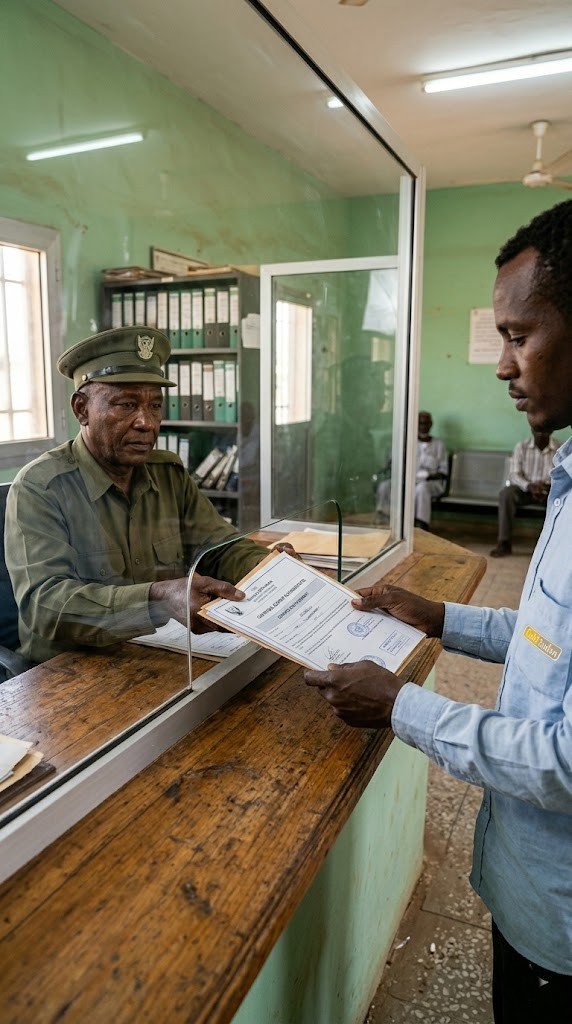
The Core Certificates: The “Holy Trinity” of Export
Three primary documents form the foundation of any legitimate gold export from Sudan:
1. The Assay Certificate
Issued by an accredited laboratory (often ISO 17025 certified), this is the scientific verdict on the cargo.
- Content: Details the gross weight, net fine gold content, purity (fineness), and a full breakdown of impurities (silver, copper, etc.).
- Validity: Must be recent (typically within 7 days of shipment) and signed by a licensed chemist.
- Role: Determines the commercial value and refining charges. Refineries will re-assay upon arrival, but this initial certificate sets the contractual baseline.
2. The Export Permit (Export License)
Issued by the Ministry of Finance and Economic Planning, this is the legal authorization to move the gold across borders.
- Content: Lists the exporter, consignee, destination, flight details, and specific batch weights. It references the Assay Certificate number.
- Validity: Strictly time-bound (usually 7–14 days). If the flight is delayed beyond this window, the permit expires and must be re-applied for.
- Role: Without this, the cargo is considered contraband and will be seized by customs.
3. The Certificate of Origin
Issued by the Sudanese Chamber of Commerce or relevant trade authority.
- Content: Certifies that the gold was mined and processed within Sudan.
- Role: Essential for determining tariff rates in the destination country and proving compliance with rules of origin for trade agreements. It is often legalized by the destination country’s embassy in Khartoum.
Secondary Compliance & Logistics Documents
Beyond the core three, a complete certification dossier includes:
- Tax Clearance & Royalty Receipts: Proof that all state dues (royalties, corporate tax) have been paid. This is a prerequisite for the Export Permit.
- Central Bank Approval: A letter or stamp from the Central Bank of Sudan (CBOS) authorizing the foreign exchange aspect of the transaction.
- Packing List & Air Waybill (AWB): Detailed logistics documents describing the packaging, seal numbers, and flight itinerary. The AWB serves as the title of goods during transit.
- Insurance Certificate: Proof of all-risk coverage from a reputable insurer (e.g., Lloyd’s of London), covering the value from vault to vault.
- OECD Due Diligence Report: For buyers in regulated markets (EU/US), a report detailing the supply chain mapping and risk assessment to prove the gold is conflict-free.
The Verification Workflow
Obtaining these certificates is a sequential, interdependent process:
- Assay First: The process begins with the laboratory test. No other document can be issued without the assay results.
- Tax Payment: Using the assay value, taxes and royalties are calculated and paid. Receipts are generated.
- Ministry Submission: The Assay Certificate, Tax Receipts, and Commercial Invoice are submitted to the Ministry of Finance.
- Permit Issuance: Once verified, the Ministry issues the Export Permit.
- Chamber of Commerce: The Permit and Assay are taken to the Chamber for the Certificate of Origin.
- Final Compilation: All documents are collated, sealed, and attached to the cargo manifest.
Any error in this chain (e.g., a typo in the weight on the Permit vs. the Assay) can halt the entire export. Sudan Gold’s dedicated compliance team manages this workflow daily, ensuring zero defects.
Digitalization and Security Features
To prevent fraud, modern Sudanese export certificates include advanced security features:
- Holographic Seals: Official stamps with holographic elements that are difficult to forge.
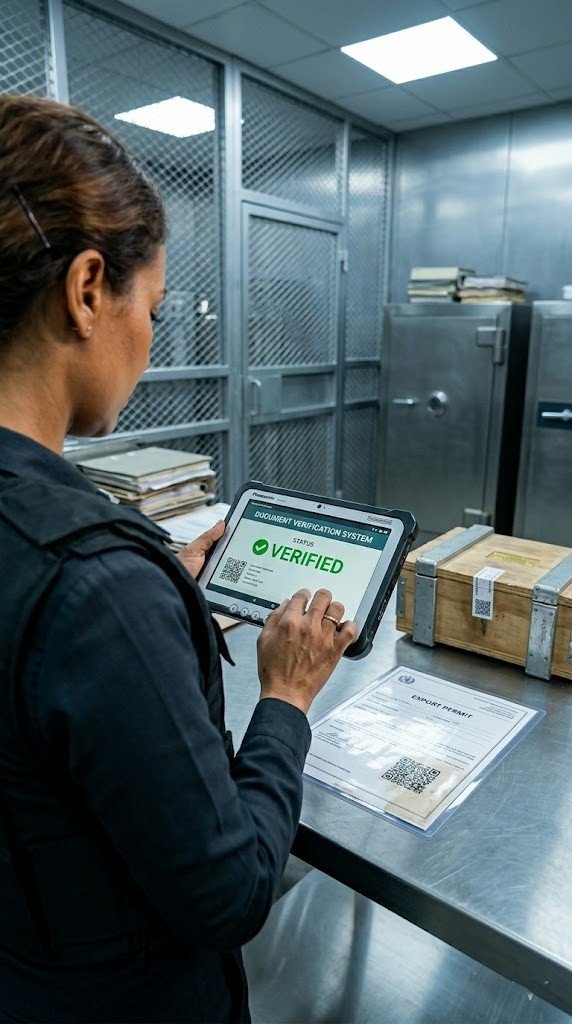
- QR Codes: Many permits now include QR codes that link to a government database for real-time verification of validity.
- Watermarked Paper: High-security paper with embedded watermarks and micro-text.
- Digital Registries: The Central Bank and Ministry of Finance are moving towards digital ledgers where certificate numbers are registered centrally, allowing international buyers to verify authenticity remotely.

Conclusion
Certification processes for exported gold are the backbone of trust in the global trade. They provide the legal, scientific, and ethical proof required to move high-value assets across borders. For buyers sourcing from Sudan, ensuring that every certificate is accurate, authentic, and complete is non-negotiable. Sudan Gold’s meticulous management of this documentation ecosystem ensures that our partners face no delays, no legal ambiguities, and no compliance risks, delivering a product that is as secure on paper as it is in the vault.
Website: goldsudan.com Email: Sales@goldsudan.com