As the global demand for responsible sourcing intensifies, environmental stewardship in Sudan gold mining has moved from a peripheral concern to a central operational pillar. The historical reliance on mercury in artisanal mining poses significant ecological and health risks, but a new era of sustainable practice is emerging. For international buyers, particularly those bound by strict ESG mandates, partnering with exporters who actively mitigate environmental impact is non-negotiable. The future of Sudan’s gold sector depends on its ability to balance economic extraction with the preservation of the fragile ecosystems of the Nubian Shield and the Nile Valley.
Sudan Gold is leading this transition. We are actively deploying mercury-free technologies, implementing land rehabilitation programs, and enforcing strict waste management protocols. Our commitment ensures that the gold we export is not only economically valuable but also environmentally sound, securing our license to operate and meeting the rigorous standards of global markets.
The Mercury Challenge and the Shift to Alternatives
The most pressing environmental issue in artisanal gold mining is the use of mercury to amalgamate gold.
- The Risk: Mercury vapor releases into the atmosphere and runoff contaminates water sources, posing severe health risks to miners and local communities, and entering the food chain.
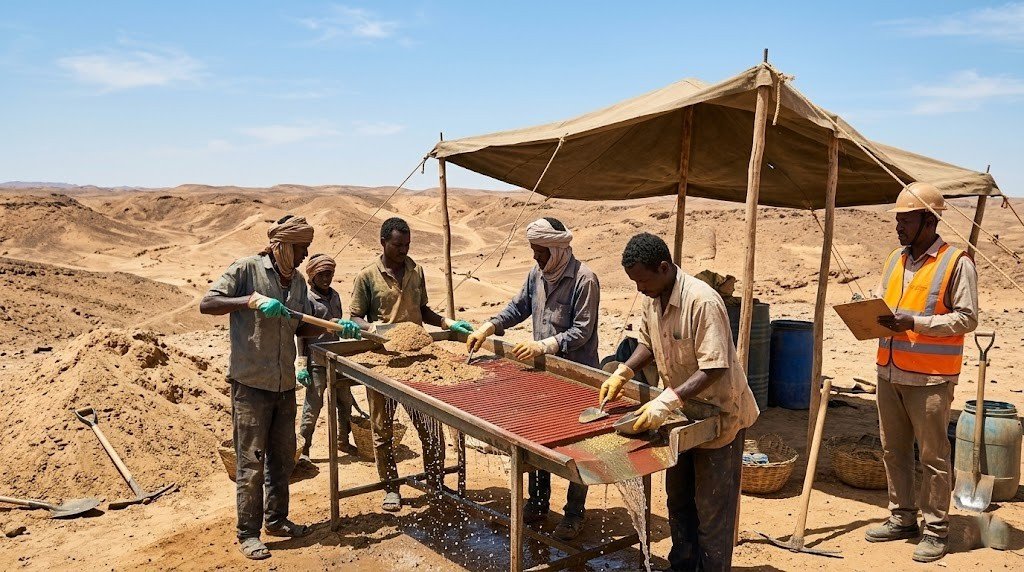
- The Solution: Sudan Gold promotes and facilitates the adoption of mercury-free techniques:
- Gravity Concentration: Using shaker tables and centrifuges to physically separate gold based on density.
- Flotation: Using chemical reagents (less toxic than mercury) to separate gold particles.
- Direct Smelting: For high-grade concentrates, specialized furnaces can extract gold without prior amalgamation.
- Implementation: We provide training and access to this equipment for our partner cooperatives, making the transition economically viable for them.
Land Rehabilitation and Water Management
Mining alters the landscape, but responsible operators ensure it heals.
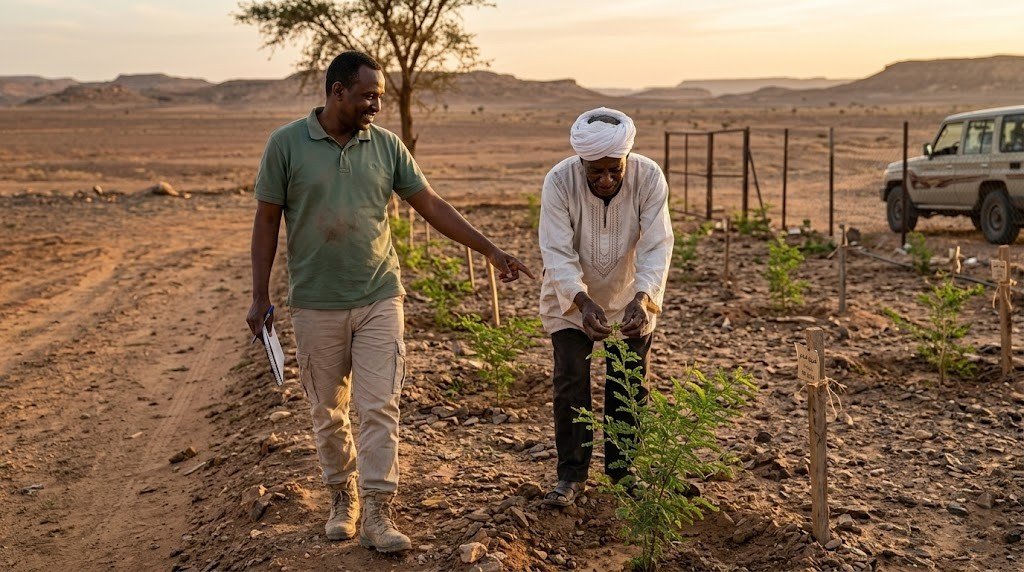
- Backfilling and Re-vegetation: We mandate that mined pits are backfilled with waste rock and topsoil, followed by the planting of native, drought-resistant vegetation to prevent erosion and restore habitat.
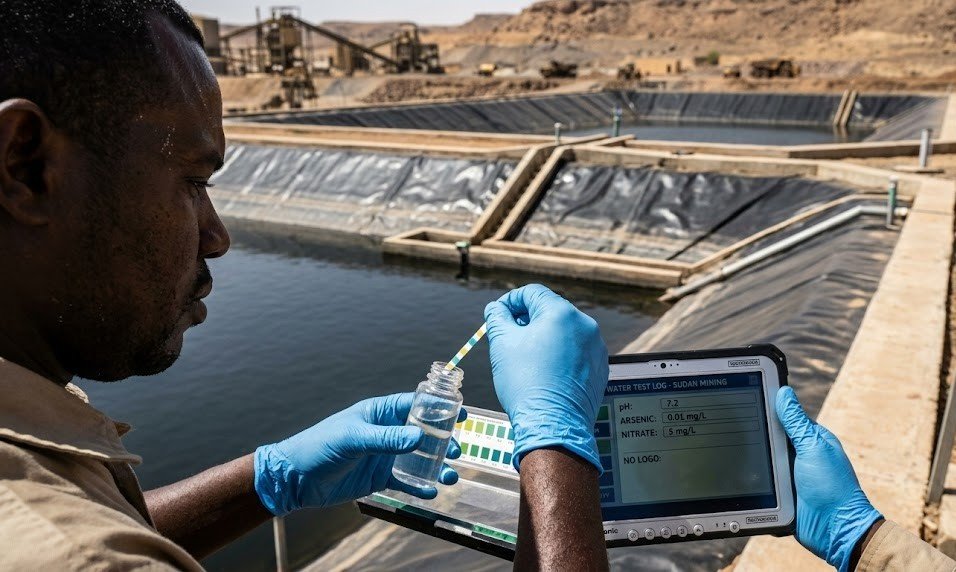
- Water Recycling: In water-scarce regions like Northern Sudan, our processing units utilize closed-loop water systems that recycle up to 90% of process water, minimizing extraction from local aquifers.
- Tailings Management: Waste material (tailings) is stored in engineered facilities designed to prevent leaching into groundwater, with regular monitoring for stability and contamination.
Regulatory Framework and Compliance
Sudan’s regulatory environment is evolving to enforce higher standards:
- Environmental Impact Assessments (EIAs): Mandatory EIAs are now required for all large-scale mining projects and increasingly for aggregated artisanal zones, ensuring potential impacts are identified and mitigated before operations begin.
- Monitoring and Enforcement: The Ministry of Environment and Natural Resources, in collaboration with the Mining Corporation, conducts regular inspections to ensure compliance with waste disposal and water usage regulations.
- International Alignment: Sudan is aligning its standards with international best practices (e.g., IFC Performance Standards) to attract responsible investment and access premium markets.
The Business Case for Stewardship
Environmental responsibility is not just ethical; it is economic:
- Market Access: Major refineries and institutional buyers increasingly refuse gold sourced from operations with poor environmental records. Stewardship unlocks these high-value channels.
- Community License to Operate: Protecting local water and land builds trust with communities, reducing conflict and ensuring long-term operational stability.
- Efficiency: Modern, cleaner technologies often offer higher recovery rates and lower long-term liability costs compared to outdated, polluting methods.
Conclusion
Environmental stewardship in Sudan gold mining is the pathway to a sustainable future. By rejecting harmful practices like mercury use and embracing land rehabilitation and water conservation, Sudan Gold is proving that resource extraction and ecological integrity can coexist. For our partners, this commitment means sourcing gold that protects the planet and the people who live on it. In the modern economy, the cleanest gold is not just pure in karat, but pure in conscience.
Website: goldsudan.com Email: Sales@goldsudan.com