In an era defined by geopolitical shocks, logistical bottlenecks, and unpredictable market swings, supply chain resilience in gold export has become the single most critical metric for institutional buyers. It is no longer enough to simply have a source of gold; partners must have a supply chain that can absorb disruption, adapt to changing conditions, and deliver consistently regardless of external turbulence. For Sudan, a nation navigating complex transitions, building this resilience requires a multi-layered strategy: diversifying logistics corridors, maintaining strategic inventory buffers, decentralizing aggregation points, and fostering deep local relationships that ensure operational continuity even when national infrastructure falters.
Sudan Gold has engineered our operations specifically for resilience. We do not rely on a single route, a single airport, or a single supplier base. Instead, we have built a flexible, redundant network that allows us to pivot instantly when challenges arise, ensuring that our partners’ supply lines remain unbroken when others fail.
Pillar 1: Logistics Diversification
Reliance on a single corridor is a single point of failure. Our resilience starts with options:
- Multi-Airport Strategy: We do not depend solely on Khartoum International Airport. We maintain active operational clearance and security protocols at secondary airfields in Port Sudan, Dongola, and Atbara. If one hub is congested or closed, we shift operations seamlessly to another.
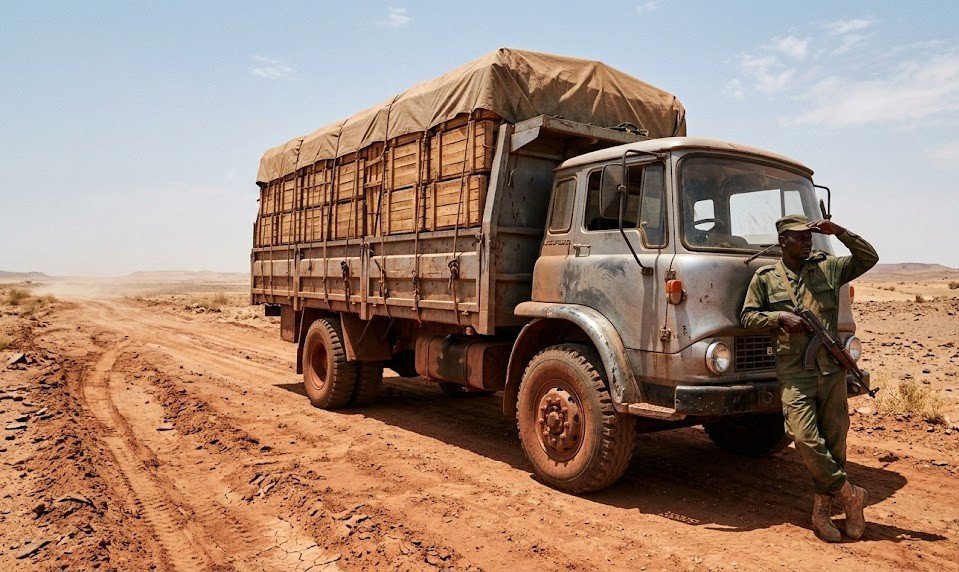
- Route Redundancy: Ground transport from mine sites to airports utilizes multiple pre-scouted routes. Our logistics team monitors real-time security and road conditions, switching convoys to alternative paths instantly if a primary route is compromised.
- Carrier Flexibility: We hold contracts with multiple cargo airlines (regional and international) and maintain relationships with charter operators. This ensures that if a scheduled flight is cancelled, we can secure a charter within hours.
Pillar 2: Strategic Inventory Buffering
Just-in-time delivery is risky in frontier markets. We operate on a “Just-in-Case” model:
- Regional Vaults: Instead of holding all gold in a central Khartoum vault, we distribute inventory across secure, insured facilities in different regions (e.g., Northern State, River Nile, and Dubai). This geographic dispersion protects against localized instability or natural disasters.
- Safety Stock Levels: We maintain a rolling inventory buffer equivalent to 4–6 weeks of contracted volume. This allows us to fulfill shipments even if mining output temporarily dips due to weather or local disruptions.
- Pre-Cleared Cargo: Whenever possible, we pre-clear documentation and secure cargo space on flights days in advance, reducing the dwell time at airports where delays often occur.
Pillar 3: Decentralized Aggregation
Centralization creates bottlenecks; decentralization creates flow:
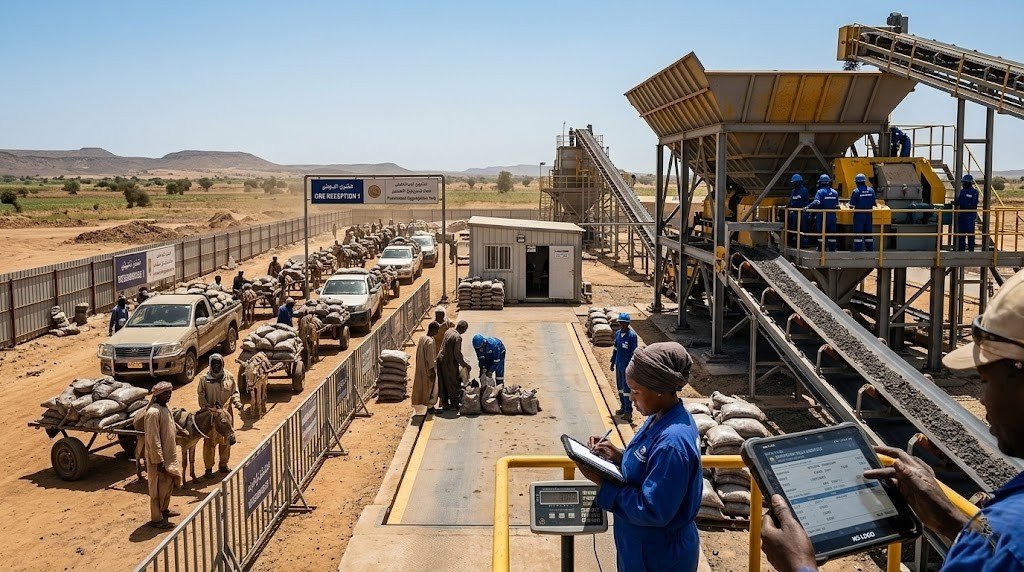
- Local Hubs: We operate multiple small-scale aggregation centers near key mining clusters rather than forcing all material to a single central location. This reduces transport distances, lowers security risks, and keeps cash flowing quickly to miners.
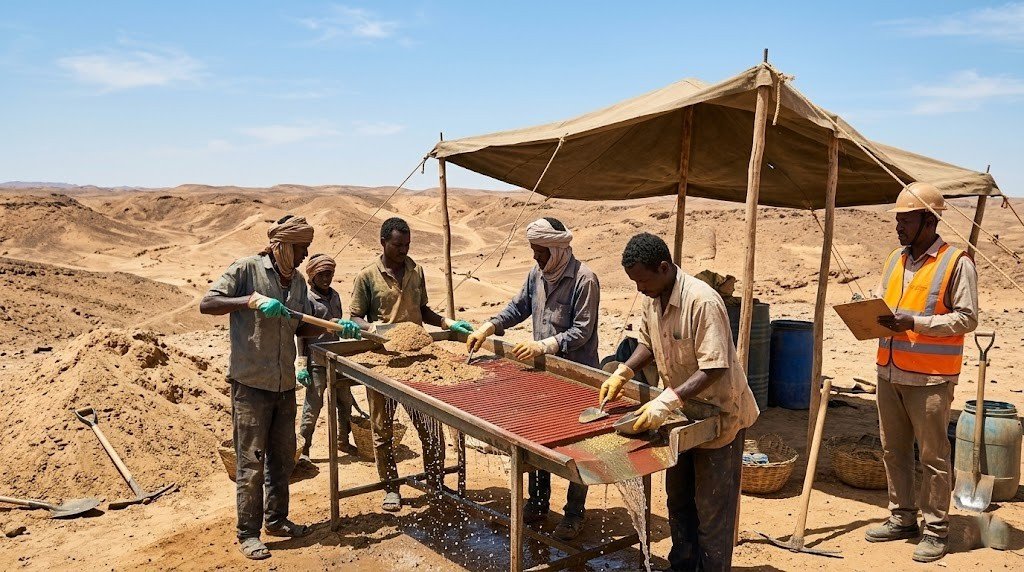
- Mobile Processing Units: For remote sites, we deploy mobile sorting and testing units that can process ore on-site, reducing the volume and value density of material needing long-distance transport.
- Community Integration: By embedding our aggregation points within local communities, we leverage local knowledge and social networks to anticipate and navigate disruptions before they impact operations.
Pillar 4: Human Capital and Local Relationships
Technology and infrastructure are useless without trusted people:
- Local Expertise: Our teams are composed of locals who know the terrain, the tribes, and the unwritten rules of the region. Their relationships with community leaders and authorities are our first line of defense against blockades or unrest.
- Cross-Training: Staff are cross-trained in multiple roles (logistics, security, compliance), ensuring that if key personnel are unavailable, operations continue without interruption.
- Crisis Drills: We conduct regular simulation drills for various disruption scenarios (airport closure, road blockade, currency freeze), ensuring every team member knows their role in a crisis.
Conclusion
Supply chain resilience in gold export is not an accident; it is a deliberate architectural choice. By diversifying routes, buffering inventory, decentralizing operations, and investing in human capital, Sudan Gold has built a supply chain that bends but does not break. For our partners, this means peace of mind. In a world where disruption is the only constant, our resilience is your guarantee. When others stop, we adapt. When others delay, we deliver.
Website: goldsudan.com Email: Sales@goldsudan.com