Africa is the world’s second-largest gold-producing continent, but not all jurisdictions offer the same value proposition. For institutional buyers and investors, comparing Sudan gold with other African producers reveals distinct strategic advantages in terms of geology, cost structure, and market timing. While established hubs like Ghana and South Africa offer stability, they face challenges with declining grades and rising operational costs. Emerging players like Mali and Burkina Faso offer volume but often carry higher security risks. Sudan occupies a unique “sweet spot”: vast, high-grade untapped reserves, a low-cost artisanal baseline that ensures immediate cash flow, and a rapidly formalizing regulatory environment that is eager for compliant foreign partnership.
Sudan Gold provides a comparative edge by leveraging these specific national advantages. We offer partners access to a resource base that combines the scale of West Africa with the geological potential of the Nubian Shield, all at a cost basis that outperforms mature markets.
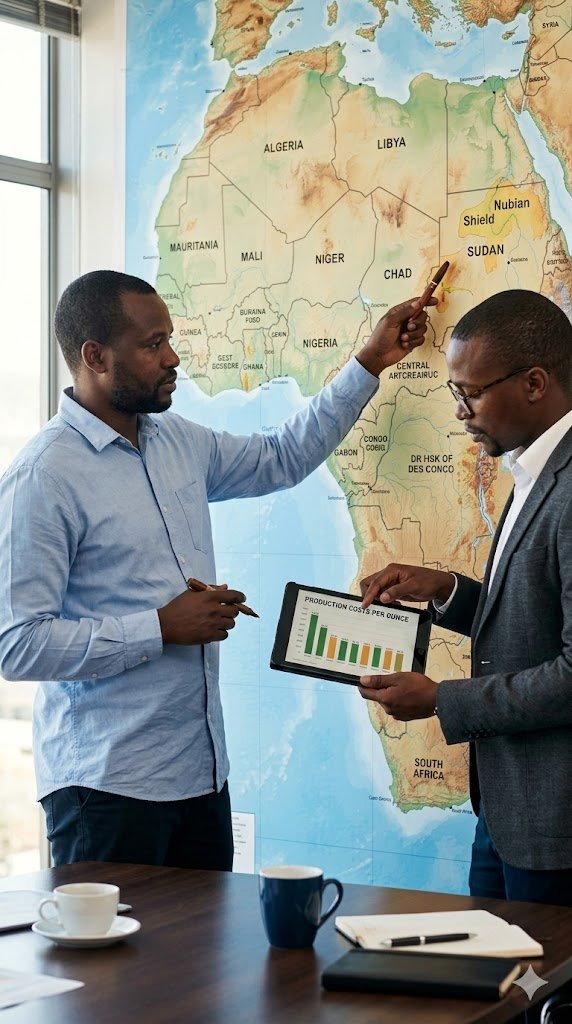
1. Geological Potential: The Nubian Shield Advantage
Sudan’s geology sets it apart from many competitors.
- Sudan: Situated on the Nubian Shield, Sudan hosts high-grade vein systems that are often shallower and richer than the deep-level deposits of South Africa or the dispersed alluvial deposits of some West African nations. Artisanal mining has already proven high grades (often 10–20 g/t in veins), suggesting massive potential for mechanized expansion.
- Ghana & Mali: These nations have mature, world-class deposits, but many are aging. New discoveries often require deeper excavation or complex processing, increasing capital expenditure (CapEx).
- South Africa: Once the global leader, South Africa now faces extreme depths (up to 4km), making extraction incredibly expensive and energy-intensive.
Verdict: Sudan offers the best balance of high grade and accessibility for new investment, with lower barrier-to-entry costs for exploration and development.
2. Cost Structure and Margins
The economics of gold production vary significantly across the continent.
- Sudan: The existing artisanal sector provides a unique advantage. By aggregating this production, exporters can secure gold at a lower cost basis than building new mines from scratch. All-In Sustaining Costs (AISC) for aggregated Sudanese gold are highly competitive, often well below the global average, ensuring strong margins even if gold prices dip.
- West Africa (Mali, Burkina Faso): While costs are moderate, security levies and logistics in landlocked regions can inflate expenses.
- South Africa: AISC is among the highest globally due to depth, energy costs, and labor complexities, squeezing margins.
Verdict: Sudan’s hybrid model (aggregation + new exploration) offers superior margin potential compared to pure-play mining in mature or high-risk jurisdictions.
3. Regulatory Environment and Formalization
The speed and direction of regulatory reform are critical for investors.
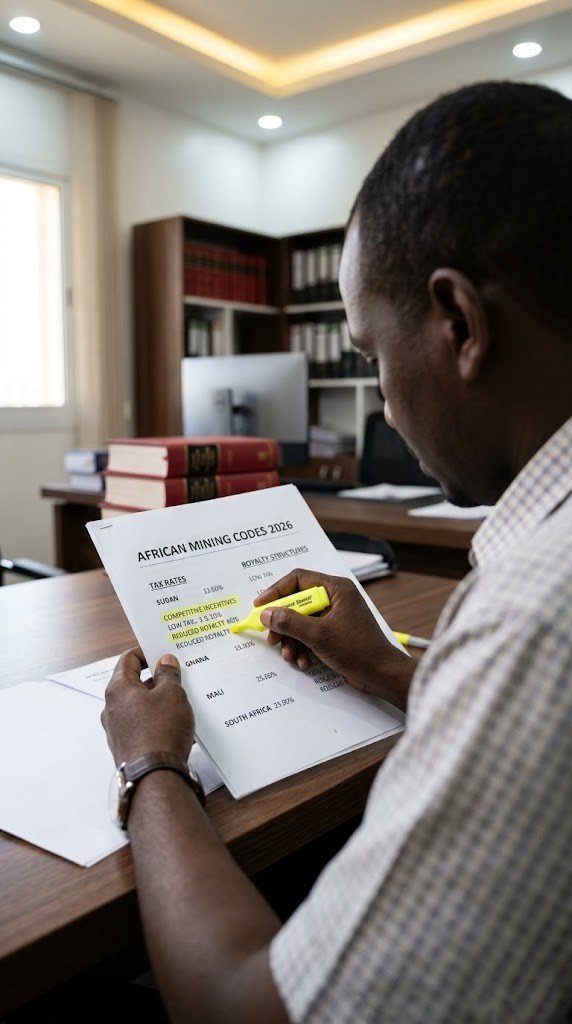
- Sudan: The government is actively driving formalization to capture revenue, offering incentives for foreign direct investment (FDI) and streamlining licensing. The desire to join EITI and align with OECD standards signals a strong commitment to compliance.
- Ghana: Highly stable and regulated, but the bureaucracy can be slow, and local content laws are strict.
- Mali/Burkina Faso: Recent political instability and changes in mining codes (increasing state ownership demands) have created uncertainty for foreign investors.
- DRC: Rich in resources but plagued by complex regulatory hurdles and significant reputational risks regarding conflict minerals.
Verdict: Sudan represents a “first-mover” opportunity in a reforming market, whereas others are either saturated (Ghana) or facing headwinds (Sahel region).
4. Security and Operational Stability
Security remains a key differentiator in African mining.
- Sudan: While national headlines can be volatile, the primary gold-producing regions in the North are historically stable and heavily protected by the state due to their economic importance. Our operations utilize dedicated security corridors that have remained uninterrupted.
- Sahel Region (Mali, Burkina Faso, Niger): These areas face significant insurgency risks, leading to frequent mine closures, kidnappings, and increased security costs.
- Ghana/South Africa: Generally stable, though community unrest and illegal mining conflicts (galamsey) pose operational challenges.
Verdict: Sudan’s specific mining corridors offer a security profile comparable to West Africa’s stable zones, but with higher geological upside, and far better than the high-risk Sahel.
5. Logistics and Market Access
Getting gold to market efficiently is crucial.
- Sudan: Direct access to the Red Sea (Port Sudan) and proximity to Dubai (4-hour flight) provide excellent logistics options. Air freight routes to UAE and Europe are well-established.
- Landlocked Nations (Mali, Burkina Faso, Niger): Depend on road transport to coastal ports (Abidjan, Dakar), which adds time, cost, and security risk.
- South Africa/Ghana: Good infrastructure but often congested ports and longer shipping times to key Asian/Middle Eastern hubs compared to Sudan.
Verdict: Sudan’s geographic location offers a logistical advantage for serving the crucial Dubai and European markets.

Conclusion
Comparing Sudan gold with other African producers highlights a compelling investment thesis. Sudan offers the geological upside of a frontier market with the emerging stability of a reforming jurisdiction, all underpinned by a cost structure that outperforms mature rivals. While Ghana offers stability and South Africa offers depth, neither can match Sudan’s combination of high-grade potential, low-cost aggregation, and strategic location. For investors seeking the next great growth engine in African gold, Sudan is not just an alternative; it is the superior choice for the next decade. Sudan Gold stands ready to guide partners through this unique landscape, maximizing returns while managing risks with precision.
Website: goldsudan.com Email: Sales@goldsudan.com