The global bullion markets are the ultimate destination for every ounce of gold exported from Sudan. While the metal originates in the arid pits of the Northern State, its value is realized in the sophisticated trading floors of London, the refineries of Zurich, the exchanges of Dubai, and the vaults of New York. For institutional buyers, understanding how Sudan gold integrates into these global ecosystems is critical. It is not enough to simply extract and ship; one must navigate the complex web of pricing benchmarks, liquidity pools, regulatory standards, and refinery intake protocols that define the international market. Sudanese gold, primarily in the form of doré bars, enters this system as a vital feedstock, feeding the world’s largest refineries and ultimately emerging as LBMA Good Delivery bars that underpin global finance.
Sudan Gold acts as the strategic bridge between these two worlds. We translate the raw potential of Sudan’s resources into the precise language of global markets, ensuring our partners can access the deepest liquidity and highest valuations while maintaining full compliance with international standards.

The Pricing Benchmark: LBMA and Beyond
Global gold prices are not arbitrary; they are set by specific mechanisms that Sudanese exports must align with:
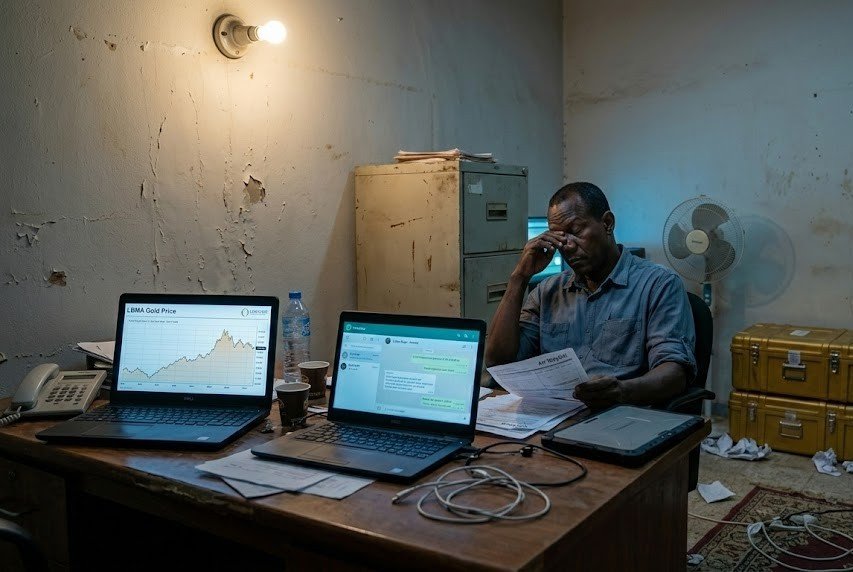
- LBMA Gold Price: The primary global benchmark, set twice daily in London. Most long-term contracts for Sudanese doré are indexed to this price (e.g., “LBMA AM Fix minus X%”).
- COMEX Futures: The New York futures market drives short-term volatility and hedging strategies. Traders often use COMEX contracts to lock in prices for Sudanese shipments before they even leave Khartoum.
- Regional Premiums/Discounts: In hubs like Dubai or Mumbai, local supply/demand dynamics can cause the physical price to trade at a premium or discount to the paper price. Sudanese exporters must time their shipments to capture these regional arbitrage opportunities.
The Refinery Gateway: From Doré to Good Delivery
Sudanese gold rarely enters the market as a final product; it enters as doré (85-92% purity) and must be refined to 99.99% purity to become “Good Delivery” standard.
- Major Refining Hubs: The vast majority of Sudanese doré flows to refineries in the UAE (Dubai), Switzerland (Zurich), India (Mumbai), and Turkey (Istanbul). These facilities have the capacity and technology to handle large volumes of African doré efficiently.
- The Value Add: Refining transforms the metal into LBMA-accredited bars, unlocking access to central bank reserves, ETF backing, and interbank lending markets where only 99.99% bars are accepted.
- By-Product Recovery: Global refineries maximize value by recovering silver, copper, and platinum group metals from Sudanese doré, crediting these back to the seller and improving overall economics.
Liquidity and Market Access
The global bullion market offers unparalleled liquidity, but access is gated by standards:
- LBMA Good Delivery List: Only bars produced by refineries on this list are universally accepted without assay. Sudanese exporters must partner with listed refineries to ensure their gold is instantly tradable.
- OTC Markets: The Over-The-Counter market in London and Zurich handles the bulk of physical gold trading. It relies on trust and credit lines, making the reputation of the exporter (like Sudan Gold) crucial.
- ETFs and Central Banks: A significant portion of global demand comes from Exchange Traded Funds (like GLD) and central bank reserves. These entities strictly require LBMA-standard gold, reinforcing the need for high-quality refining of Sudanese material.
Regulatory Convergence
Global markets are increasingly regulated, forcing convergence in standards:
- AML/KYC Harmonization: Banks and refineries in London, Zurich, and New York now demand the same level of due diligence (OECD, FATF) from Sudanese suppliers as they do from local counterparts. This has forced a positive uplift in Sudanese export practices.
- Sanctions Compliance: Global traders must ensure Sudanese gold does not violate any international sanctions regimes. Sudan Gold maintains rigorous screening to ensure all cargo is fully compliant with US, EU, and UN regulations.
- ESG Mandates: Institutional investors in global markets are increasingly demanding proof of ethical sourcing. Sudanese gold that can demonstrate conflict-free status and community benefit gains a competitive edge in these discerning markets.
Strategic Implications for Buyers
For buyers, connecting Sudan to global markets offers distinct advantages:
- Arbitrage Opportunities: Buying doré in Sudan and selling refined bars in London/Dubai captures the refining margin.
- Supply Diversification: Adding Sudanese volume reduces reliance on traditional suppliers (e.g., Australia, Peru), enhancing supply chain resilience.
- Cost Efficiency: Direct sourcing from Sudan often yields a lower cost basis than buying refined bars on the spot market, improving net margins.
Conclusion
Global bullion markets and Sudan gold are inextricably linked. Sudan provides the raw volume; the global markets provide the liquidity, valuation, and legitimacy. By mastering the pathways from Khartoum to London, Zurich, and Dubai, Sudan Gold ensures that our partners can tap into the deepest pools of capital and the most efficient trading mechanisms in the world. In this global ecosystem, Sudanese gold is not just a commodity; it is a strategic asset that fuels the engines of international finance.
Website: goldsudan.com Email: Sales@goldsudan.com