The journey of gold from the rugged terrains of Sudan’s Northern State to the high-security vaults of global refineries in Zurich, Dubai, or New York is a marvel of logistical precision and regulatory alignment. For institutional buyers, understanding this supply chain is crucial. It reveals how gold export from Sudan transforms from raw, artisanal doré into LBMA-standard bullion, ready for the global market. This process is not merely about transport; it is a rigorous sequence of verification, compliance, and refinement that ensures every ounce is conflict-free, legally sourced, and financially bankable.
Sudan Gold orchestrates this entire lifecycle. We do not simply ship metal; we manage a seamless pipeline that bridges the gap between local extraction and international acceptance. Our operations are designed to meet the exacting intake standards of the world’s leading refineries, ensuring that buying gold from Sudan results in a product that is indistinguishable in quality and compliance from any other major global source.
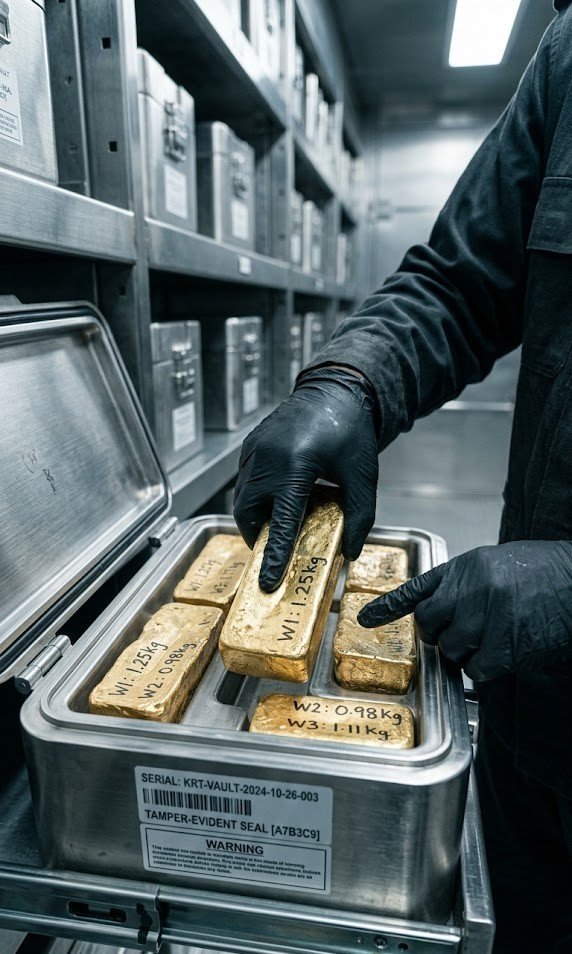
Step 1: Aggregation and Preliminary Assay in Sudan
The journey begins at our secure aggregation facilities in Khartoum. Here, gold sourced from licensed artisanal cooperatives and commercial mines undergoes its first critical transformation.
- Consolidation: Small batches from various sources are aggregated to create shipment-sized lots.
- Preliminary Assay: Each batch undergoes fire assay testing in our accredited local laboratory to determine initial purity (typically 85%–92% for doré).
- Documentation: A preliminary certificate is issued, forming the basis for the export declaration and commercial invoice.
This stage ensures that only material meeting our strict quality thresholds enters the export pipeline.
Step 2: Regulatory Clearance and Export Preparation
Before leaving Sudan, the gold must clear a rigorous regulatory checkpoint.
- Final Verification: The Ministry of Finance and the Central Bank of Sudan verify the assay results and tax payments.
- Export Permit Issuance: An official Export Permit is granted, legalizing the cross-border movement.
- Secure Packaging: The gold is sealed in tamper-evident containers, assigned unique serial numbers, and loaded into armored transport for the trip to Khartoum International Airport.
Sudan Gold manages this bureaucratic maze with precision, ensuring no delays occur at the origin.
Step 3: Secure Air Freight to Hub Refineries
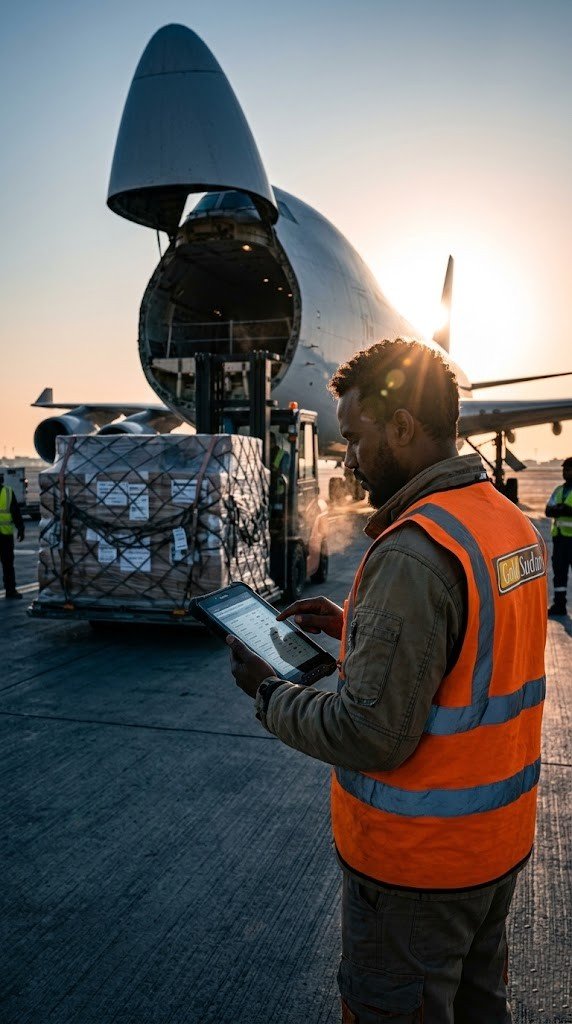
The physical movement of gold is executed via specialized high-value cargo carriers.
- Direct Flights: Most shipments fly directly to Dubai (DXB), the primary hub for African gold. Some routes connect via Europe (e.g., Frankfurt or Zurich) for specific refinery destinations.
- In-Transit Security: Cargo is tracked via GPS and guarded throughout the flight. Insurance coverage is active from the moment the vault door closes in Khartoum.
- Customs Transit: In hub airports like Dubai, the gold often moves under bonded status directly to the refinery’s secure facility, minimizing exposure to general customs areas.
This logistical leg is swift, typically taking less than 24 hours from departure to arrival at the refinery gate.
Step 4: Refinery Intake and Final Assay
Upon arrival at the destination refinery (e.g., in Switzerland or the UAE), the most critical technical phase begins.
- Intake Inspection: The refinery verifies the seals and matches the shipment against the accompanying documentation.
- Independent Assay: The gold is melted down and sampled for a final, definitive assay. This determines the exact fine gold content, which may differ slightly from the Sudanese preliminary assay.
- Reconciliation: Any variance in purity or weight is reconciled between the buyer and seller based on the contract terms (usually favoring the refinery’s final result).
This step transforms the raw doré into a verified, quantifiable asset ready for refining.
Step 5: Refining and Casting to LBMA Standards
The final transformation occurs in the refinery’s furnaces.
- Purification: The gold is refined to 99.99% purity (24 karat) using advanced chemical or electrolytic processes.
- Casting: The pure gold is cast into standardized bars (e.g., 1kg or 400oz Good Delivery bars).
- Certification: Each bar is stamped with the refinery’s hallmark, serial number, and purity, making it tradable on the global LBMA market.
At this point, the gold from Sudan has fully integrated into the global financial system, indistinguishable from gold sourced anywhere else.
Why This Pipeline Matters for Buyers
Understanding this journey highlights the value of a managed supply chain:
- Traceability: Every step is documented, ensuring the gold is conflict-free.
- Quality Assurance: The dual-assay process (Sudan + Refinery) guarantees accurate valuation.
- Speed: Optimized logistics reduce the time from mine to market, improving liquidity.
- Compliance: Adherence to international standards ensures the gold is accepted by banks and investors globally.
Sudan Gold’s mastery of this pipeline allows us to deliver a product that is not just gold, but a fully compliant, financially liquid asset.

Conclusion and Professional Call to Action
The path from Sudan’s mines to global refineries is complex, but for those who navigate it correctly, it offers a direct line to one of the world’s most abundant gold sources. Sudan Gold has perfected this journey, ensuring that every gram we export arrives at the refinery ready for immediate conversion into global wealth.
We invite refiners, institutional buyers, and sovereign funds to partner with us. Let us demonstrate how our end-to-end management of this supply chain can secure your feedstock and enhance your operational efficiency.
Contact us today to discuss our refinery partnerships and delivery schedules.
Website: goldsudan.com Email: Sales@goldsudan.com