The Middle East, anchored by the United Arab Emirates, Saudi Arabia, and Qatar, serves as the primary gateway and consumption hub for Sudanese gold. This region’s demand is not merely a function of proximity; it is driven by a deep cultural affinity for gold as a store of wealth, a booming jewelry manufacturing sector, and strategic government initiatives to position cities like Dubai and Riyadh as global commodities trading centers. For Sudan, the Middle East represents its most natural and lucrative export market, offering a seamless blend of logistical efficiency, regulatory alignment, and insatiable appetite for high-grade doré. Understanding the nuances of Middle East demand for Sudanese gold is essential for exporters looking to maximize value in this dynamic, high-volume corridor.
Sudan Gold has cultivated deep roots in this region. Our operations are tailored to meet the specific expectations of Middle Eastern buyers, who prioritize speed, transparency, and personal relationships. By aligning our supply chain with the region’s rapid settlement cycles and rigorous quality standards, we ensure that Sudanese gold flows effortlessly into the heart of the Arab world’s financial and cultural landscape.
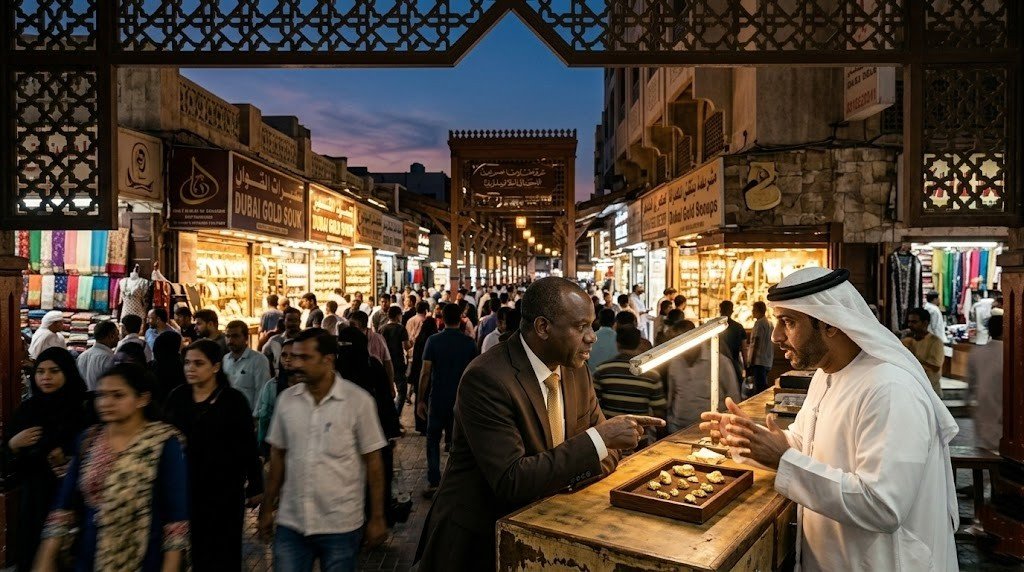
The Cultural and Economic Drivers
Gold holds a unique status in the Middle East, driving demand through multiple channels:
- Cultural Heritage: Gold is integral to weddings, gifts, and savings across the Arab world. This cultural bedrock ensures consistent demand regardless of short-term price fluctuations.
- Investment Safe Haven: In a region prone to geopolitical shifts, physical gold remains a preferred asset for preserving wealth, driving both retail and institutional buying.
- Manufacturing Hub: The UAE and Saudi Arabia have invested heavily in local refining and jewelry manufacturing. Facilities like the Dubai Gold & Commodities Exchange (DGCX) and massive industrial zones in Riyadh require a steady stream of doré to feed their production lines.
- Re-Export Powerhouse: Dubai acts as a global redistribution center. Sudanese gold imported here is often refined and re-exported to India, Europe, and Africa, leveraging the UAE’s free-zone benefits and logistics network.
Key Markets: UAE, Saudi Arabia, and Beyond
Each nation in the region plays a distinct role:
- UAE (Dubai): The undisputed leader. Dubai’s DMCC (Dubai Multi Commodities Centre) hosts hundreds of gold traders and refineries. It offers tax-free zones, world-class security, and immediate liquidity, making it the first stop for most Sudanese exports.
- Saudi Arabia: A rapidly growing market driven by Vision 2030, which aims to localize mining and manufacturing. Saudi refiners are increasingly seeking direct sources like Sudan to reduce reliance on intermediaries.
- Qatar & Kuwait: Smaller but wealthy markets with high per-capita gold consumption, often serving as niche hubs for high-purity investment bars and luxury jewelry.
Logistics: The Shortest Route to Market
The geographic proximity between Sudan and the Gulf is a decisive competitive advantage:
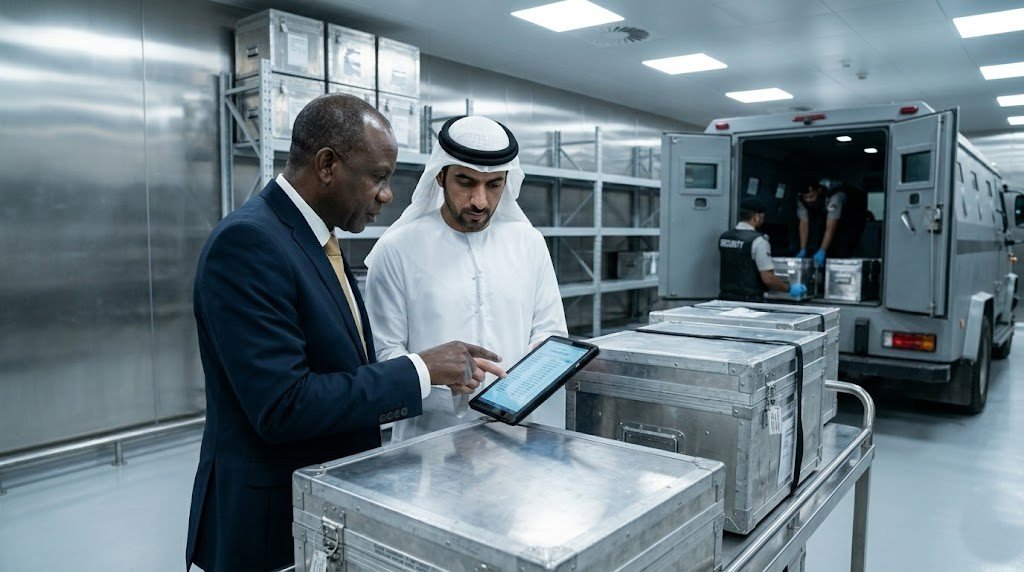
- Flight Time: Direct cargo flights from Khartoum to Dubai or Riyadh take less than 4 hours, minimizing transit risk and insurance costs.
- Frequency: Multiple daily cargo flights ensure that gold can be moved almost immediately after assay, reducing exposure to price volatility.
- Customs Efficiency: The GCC (Gulf Cooperation Council) nations have streamlined customs procedures for precious metals, often allowing pre-clearance based on digital documentation.
- Secure Corridors: Established secure transport networks link airports directly to vaults and refineries, ensuring end-to-end security within the region.
Pricing and Trade Dynamics
The Middle East market operates with specific commercial characteristics:
- Dubai Spot Benchmark: Prices are often referenced against the local Dubai spot price, which can trade at a premium or discount to LBMA depending on regional supply/demand imbalances.
- Fast Settlement: The region is known for rapid payment cycles. Deals are often settled within 24–48 hours of delivery and assay, providing excellent cash flow for exporters.
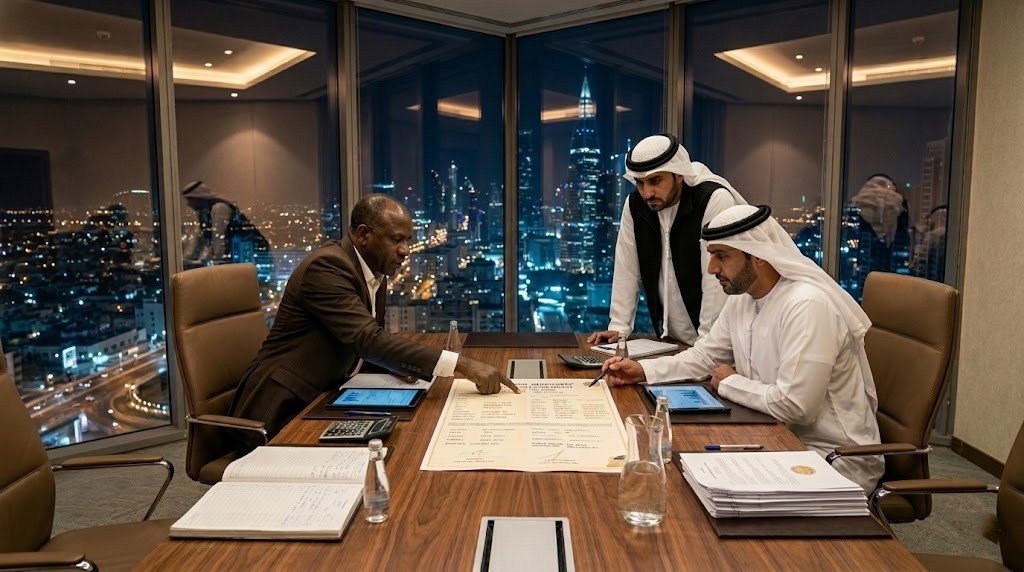
- Negotiation Culture: Business in the Middle East is relationship-driven. Face-to-face meetings, trust-building, and flexible terms are often more valued than rigid contracts, although formal agreements are standard for large volumes.
- Refining Charges: Local refineries offer competitive rates for Sudanese doré due to the high volume and established trade links, making it cost-effective to process material locally before re-export.
Regulatory Alignment and Compliance
The region has significantly upgraded its compliance framework:
- FATF Compliance: The UAE and Saudi Arabia have strengthened AML/CFT laws to meet global standards, requiring rigorous KYC and source-of-funds verification.
- Good Delivery Standards: Refineries in the region increasingly adhere to LBMA standards, demanding high levels of traceability and ethical sourcing from suppliers like Sudan Gold.
- ESG Focus: There is a growing emphasis on responsible sourcing, with buyers asking for proof of conflict-free status and environmental stewardship, aligning with our own compliance mandates.
Conclusion
Middle East demand for Sudanese gold is a cornerstone of the regional economy, linking Africa’s richest gold reserves with the Gulf’s financial prowess. The combination of cultural affinity, geographic proximity, and advanced infrastructure makes this corridor the most efficient and profitable route for Sudanese exports. For buyers in the UAE, Saudi Arabia, and beyond, Sudan offers a reliable, high-quality supply that fuels their industries and investments. Sudan Gold stands at the center of this thriving trade, committed to delivering excellence, integrity, and value to our partners in the Middle East, forging a golden bridge between two historically connected regions.
Website: goldsudan.com Email: Sales@goldsudan.com