In the high-value, low-margin world of international gold trading, quality assurance (QA) is not merely a procedural step; it is the fundamental mechanism that preserves capital and reputation. For institutional buyers sourcing from emerging markets like Sudan, the risk of variance in purity, weight, or physical integrity can result in significant financial loss and refinery rejections. A robust quality assurance framework ensures that the gold delivered matches the contract specifications exactly, bridging the gap between local extraction realities and the stringent intake standards of global refineries in Zurich, Dubai, and London.
Sudan Gold has institutionalized a “Zero-Defect” QA philosophy. We do not rely on spot checks or final inspections alone; instead, we embed quality control into every stage of our supply chain—from the initial visual inspection at the mine face to the final sealing of the export crate. Our goal is to eliminate surprises, ensuring that every shipment arrives at its destination with verified integrity, ready for immediate processing.
The Three Pillars of Gold QA
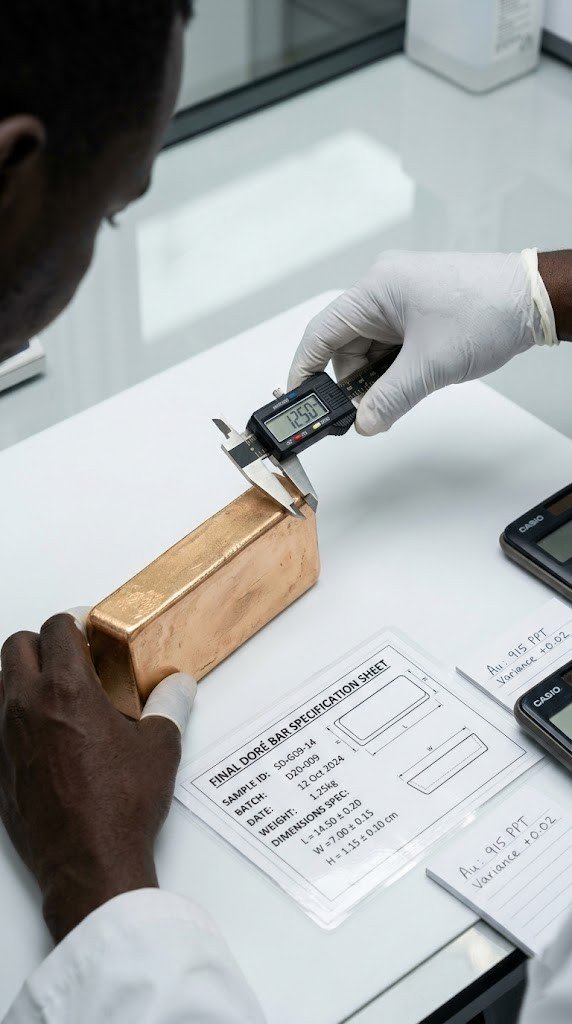
Effective quality assurance in the gold trade rests on three non-negotiable pillars: Purity Verification, Weight Accuracy, and Physical Integrity.
1. Purity Verification (Fineness)
The most critical metric is the gold content. QA protocols ensure that the stated fineness (e.g., 915 fine) is accurate within a tight tolerance.
- Multi-Stage Assaying: We employ a dual-assay system where an initial internal fire assay is cross-verified by a second independent sample before export.
- Homogeneity Checks: For doré bars, we ensure the melting process was sufficient to mix silver, copper, and gold uniformly, preventing “hot spots” of varying purity that could skew sampling results.
- Trace Element Analysis: Using ICP-MS, we verify the levels of impurities (silver, copper, iron, mercury) to ensure they fall within acceptable limits for the target refinery.
2. Weight Accuracy
Discrepancies in weight, even by grams, can lead to disputes worth thousands of dollars.
- Calibrated Scales: All weighing is performed on scales calibrated daily against certified reference weights traceable to national standards.
- Dual Verification: Every batch is weighed twice by different operators. The results must match within a 0.01% tolerance; otherwise, the weighing is repeated.
- Tare Verification: Containers and packaging materials are weighed separately to ensure the net weight of the gold is calculated precisely.
3. Physical Integrity
The physical condition of the gold affects how easily it can be processed.
- Visual Inspection: Bars are inspected for cracks, slag inclusions, sand pockets, or oxidation, which can indicate poor casting or contamination.
- Stamping Legibility: Serial numbers, weight, and purity stamps must be clear and deep enough to survive transport without becoming illegible.
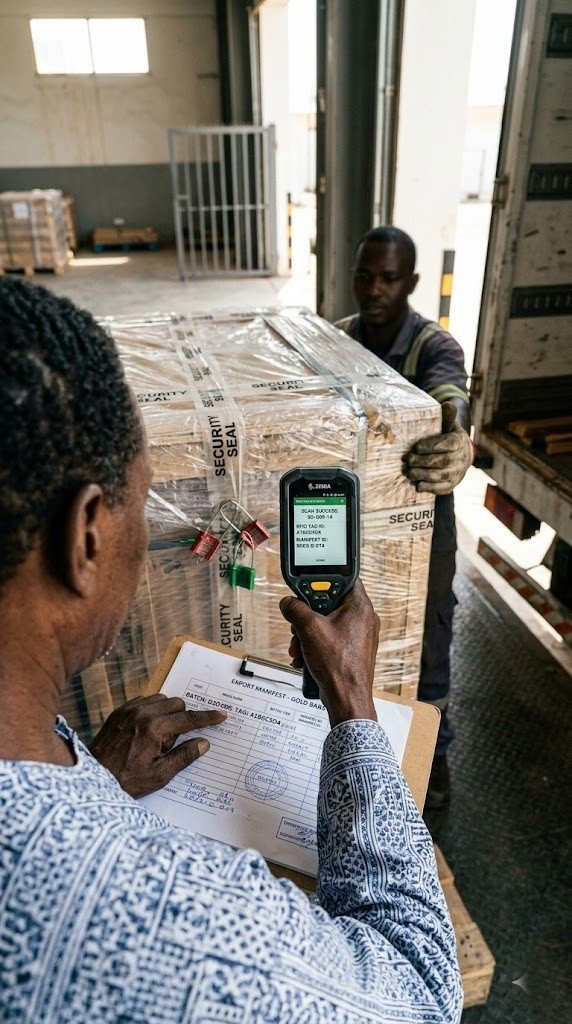
- Packaging Security: QA extends to the packaging, ensuring crates are tamper-evident, moisture-proof, and securely strapped to prevent movement or damage during air freight.
QA Protocols at Each Supply Chain Stage
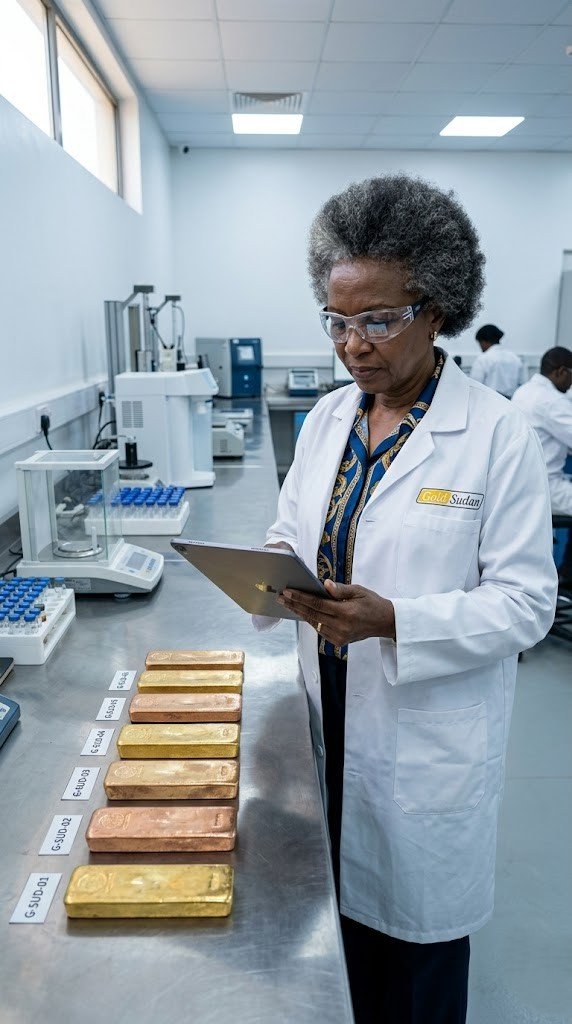
Sudan Gold applies specific QA checks at every node of the journey:
- At the Mine/Collection Point:
- Visual screening for obvious contaminants (rocks, sand).
- Handheld XRF scanning for preliminary purity estimation (screening only).
- Immediate sealing in tamper-evident bags with unique QR codes.
- At the Central Vault (Kharkoum):
- Full fire assay sampling under dual-witness supervision.
- Melting and casting into standardized bars with strict temperature controls.
- Final weighing and stamping with serialized IDs.
- Pre-Export:
- Final audit of all documentation (Assay Certificates, Packing Lists) against physical cargo.
- Third-party inspection (optional but encouraged) where buyer representatives can witness the final seal application.
- Photographic and video documentation of the loading process for the digital audit trail.
Alignment with International Standards
Our QA systems are designed to mirror the requirements of major global players:
- LBMA Good Delivery: While our doré is not LBMA-certified bullion, our casting and assaying methods align with LBMA guidelines to ensure smooth acceptance by accredited refineries.
- ISO 9001 Principles: We apply ISO 9001 quality management principles, focusing on continuous improvement, customer focus, and evidence-based decision making.
- Refinery Specifics: We tailor our QA output to meet the specific intake manuals of our partner refineries (e.g., specific bar dimensions or impurity thresholds).
The Role of Technology in QA
We leverage technology to reduce human error and enhance transparency:
- Automated Data Logging: Weighing and assay data are automatically uploaded to our secure cloud ledger, preventing manual transcription errors.
- Digital Imaging: High-resolution photos of every bar (front, back, sides) are stored with its digital ID, allowing buyers to inspect physical quality remotely before shipment.
- Blockchain Verification: Key QA milestones (assay result, weight confirmation, sealing) can be recorded on a blockchain for immutable proof of quality history.
Conclusion
Quality assurance in international gold trading is the silent guardian of value. It transforms raw, variable material into a standardized, trusted asset that can move seamlessly across borders. For buyers sourcing from Sudan, partnering with an exporter who prioritizes rigorous, transparent QA is the only way to mitigate risk and ensure profitability. Sudan Gold’s unwavering commitment to these standards ensures that every gram we export meets the highest expectations of purity, weight, and integrity, delivering not just gold, but certainty.
Website: goldsudan.com Email: Sales@goldsudan.com